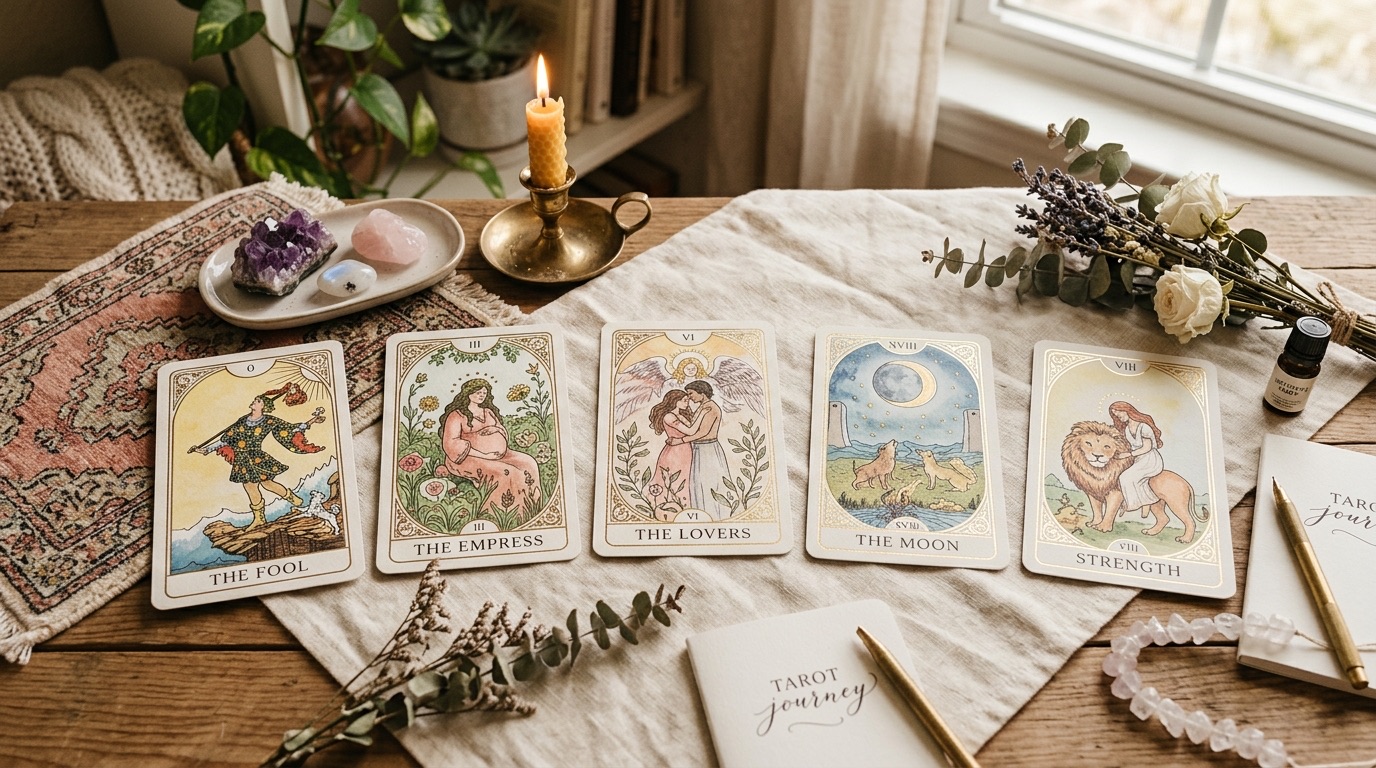
You pull a card before work, write its name at the top of the page, and then stop. Are you supposed to copy the guidebook, describe the picture, or write what you think will happen?
Start smaller. Record what was happening, the detail you noticed first, the message the card may be offering, and one thing you can watch or do next. A few clear lines will be more useful later than a page of polished interpretation.

This article contains Amazon affiliate links. As an Amazon Associate, Opal Arc earns from qualifying purchases. The three recommendations are limited to tools that make the writing easier: a guided journal, a beginner guidebook, and a pen that works for quick notes.
The six lines worth writing after every card pull
Use the same six lines each time. The repetition makes entries easy to finish on a busy day and easy to compare a week later.
- Date and situation: What was happening when you reached for the deck?
- Question: What did you actually want help understanding?
- Card and first detail: What did your eye find before you opened the book?
- First reaction: What did the card make you feel or resist?
- Possible message: What may this image be showing about the situation?
- Next: What will you notice, ask, wait for, or do now?
If you are new to reading with one card, begin with this simple one-card tarot method. It shows how to place the image beside the facts before you start writing.
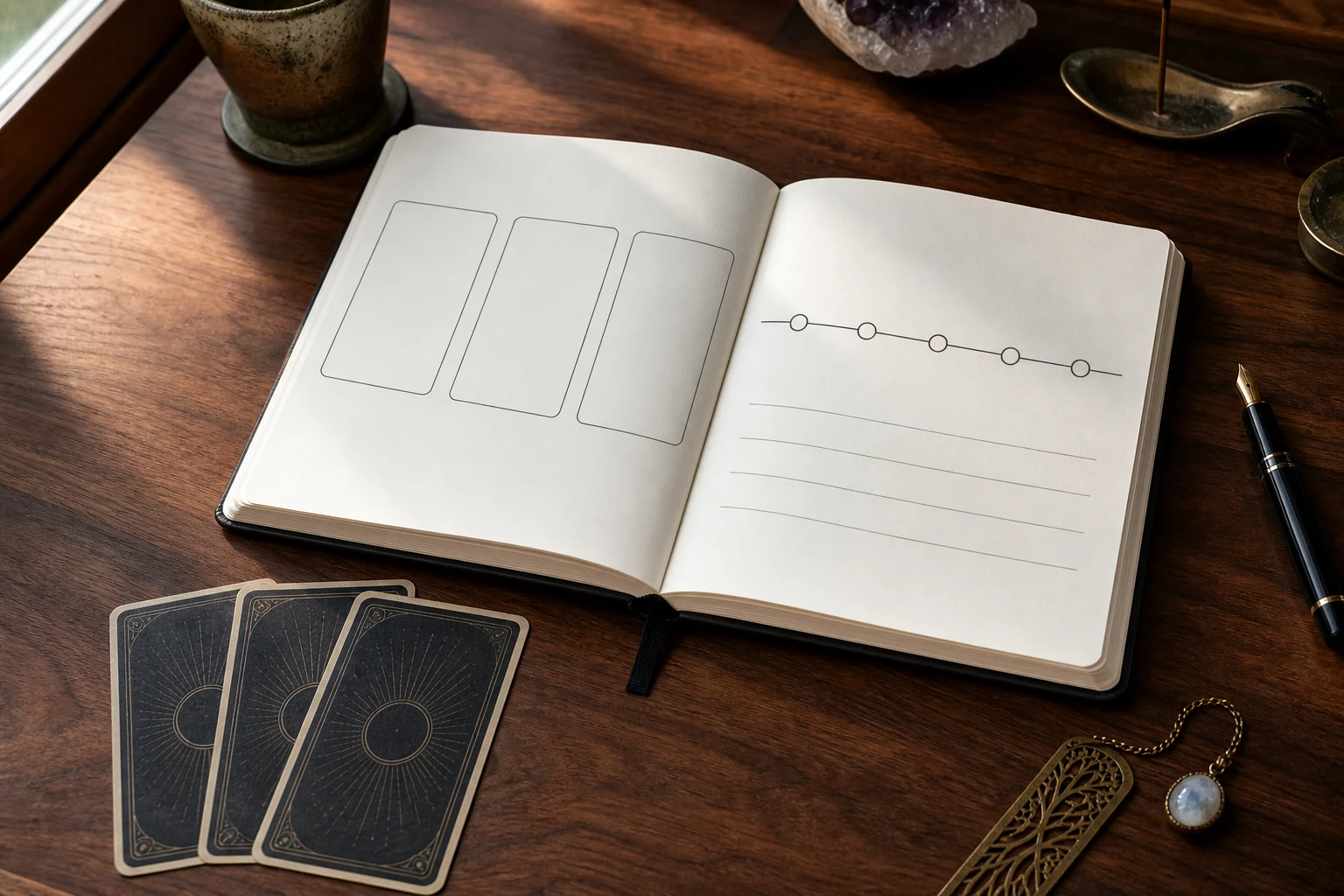 Prefer a page with built-in structure? Source a similar structured tarot journal
1. Write what was happening before the card
Give the card a real situation to answer. Instead of writing only “love reading,” try: “They have not replied since Friday, and I am deciding whether to send another message.” For work, write: “The offer sounds exciting, but the hours and support are still unclear.”
Then write one plain question underneath. What am I missing? What needs more time? What would help me make this decision? What can I choose today?
2. Record the first detail before opening the book
Write the card name, then name the figure, gesture, object, color, or direction that catches you first. With the Eight of Cups, you may notice that the figure is already walking away. With the Queen of Swords, you may see the open hand before the raised sword.
This is not a test of card knowledge. The detail simply records where your attention went before someone else's interpretation entered the room.
3. Name your honest reaction
Write how the card lands before deciding what it means: relieved, irritated, exposed, hopeful, heavy, obvious, or disappointing. If you pull Strength and feel annoyed, that matters. You may be tired of being patient, or tired of being praised for enduring something that needs to change.
4. Connect the card to something real
Bring the image back to the question. If the card shows someone gripping what they own, where are you holding too tightly? If it shows a doorway, what are you preparing to enter or leave? If it shows two people facing away from each other, where has communication stopped?
Name a behavior, conversation, deadline, or choice. “This reminds me that I keep asking for an answer while avoiding the conversation that could give me one” is more useful than “This card is about communication.”
5. Write one possible message
Keep the sentence open enough to test against your life: “This card may be showing me that I am waiting for certainty before I move,” or “This may be a week for gathering information rather than forcing the decision.” A card can suggest a direction, tension, or likely pattern without turning one page into a fixed answer.
Now check the guidebook and compare its traditional themes with what you saw. If you are still building that vocabulary, a readable first deck and useful guidebook will make this step much easier.
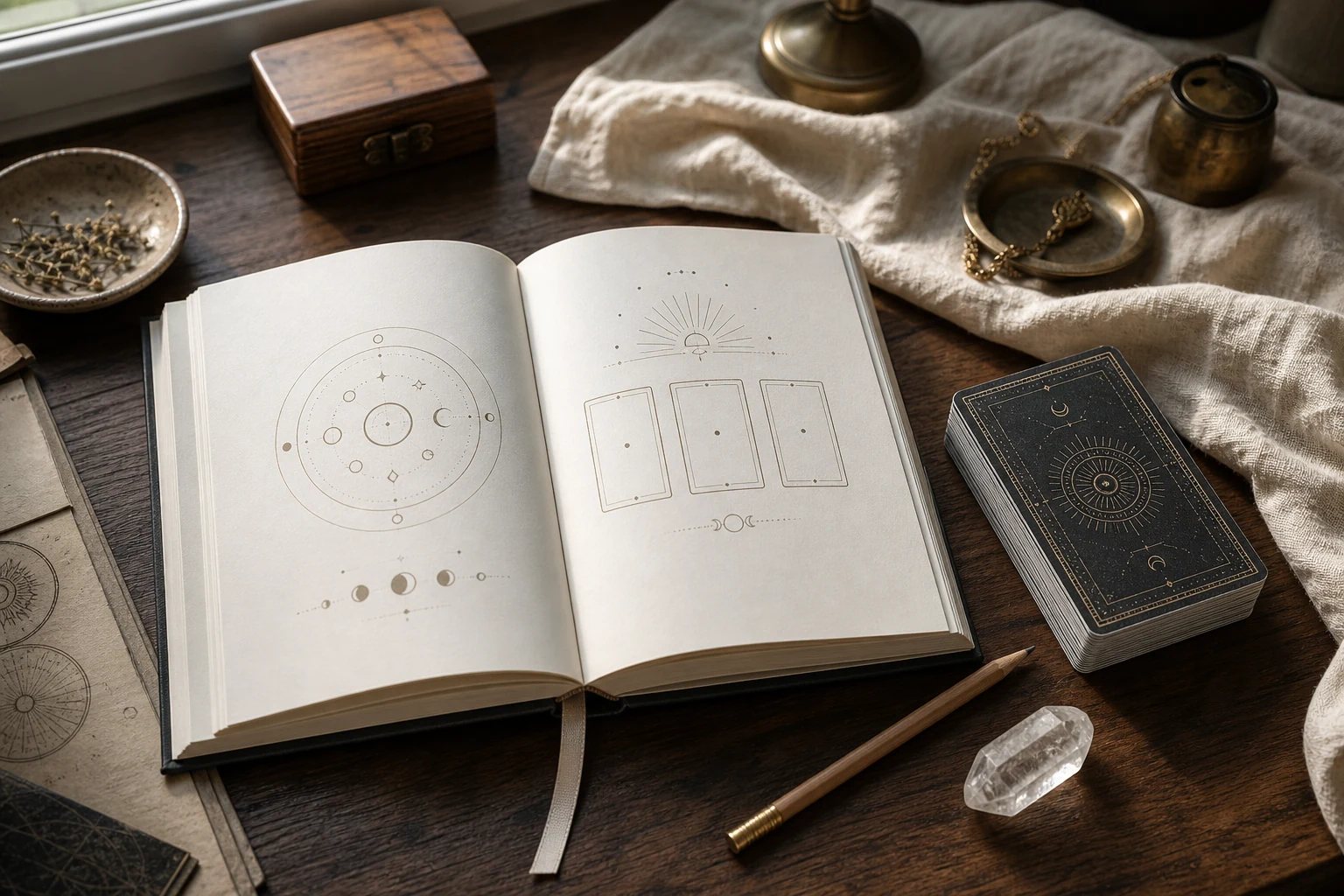 Need help learning card meanings? Source a similar beginner tarot guidebook
6. End with one thing to notice or do
Close with something smaller than the original question. Wait until tomorrow before texting. Ask about the work schedule. Notice whether a promise is followed by action. Draft the sentence you have been avoiding, or decide what information you need before choosing.
If no action is ready, write what you will watch. Timing often becomes clearer when you can see what is developing instead of asking the same question again that evening.
Three examples from real readings
Love: someone has gone quiet
Suppose you asked about someone who has gone quiet and pulled the Eight of Cups. You might write: “The figure is already moving away. I feel disappointed when I look at it. Their actions have been distant for two weeks. Today I will not send another message simply to reduce the silence.”
The page helped you place the image beside the facts. For more questions that move a love reading beyond guessing another person's thoughts, use what to ask tarot when you are confused about love.
Timing: you are waiting for an answer
You are waiting to hear about an application and pull Temperance. Your entry might say: “The water moves gradually between two cups. I want a fast yes or no. This may be a period of adjustment rather than final news. I will wait until the stated deadline, then send one follow-up.”
Career: you are deciding whether to move
You are offered a role with more status but unclear support and pull the Two of Wands. You write: “The figure is looking beyond what is already secure. I feel excited and cautious. The opportunity may be worth exploring, but I need facts about workload and authority. Tomorrow I will ask two direct questions before deciding.”
A simple tarot journal page you can copy
Copy this into any notebook. Fragments are enough; this is a reading record, not an essay.
- Date:
- Situation:
- Question:
- Card:
- First detail I noticed:
- My first reaction:
- One possible message:
- One thing to notice or do next:
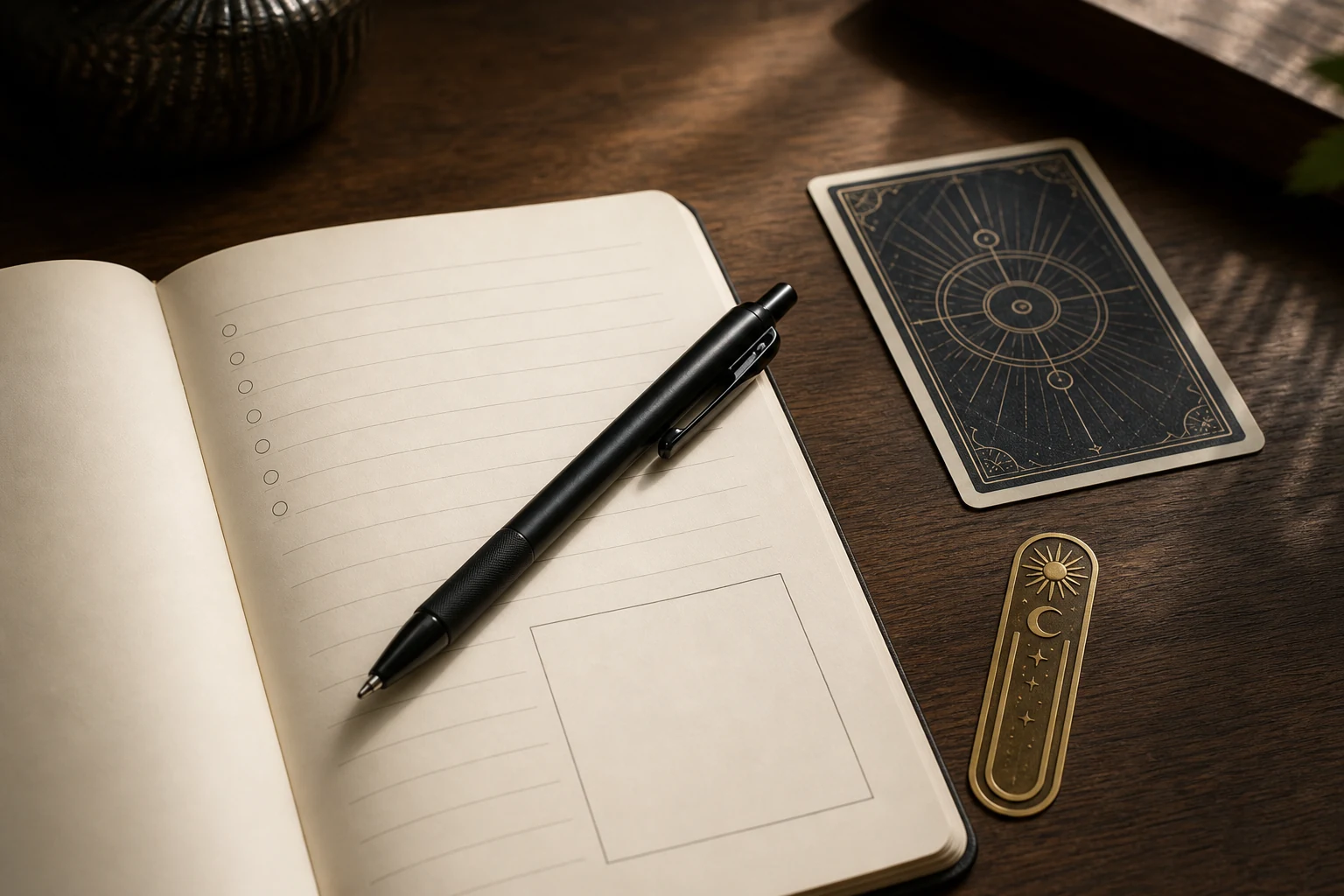 For quick, readable notes: source a similar black gel pen

How to review your notes after a week
Read the entries in order and compare them with what actually happened. You are looking for continuity: the question you kept returning to, the cards or images that repeated, and the actions that changed something.
- Which question did I ask in different forms?
- Which card, figure, or movement repeated?
- What did the situation show me after the reading?
- Which action helped, and which one did I avoid?
- What do I understand now that I could not see on day one?
This is where a journal becomes more valuable than a pile of separate readings. Tarot as a pattern language explains how repeated symbols can add context to love, timing, and career questions.
When to pause instead of writing another entry
If you keep changing the question, pulling clarifiers, or rewriting the same answer because none of it feels reassuring enough, pause for the day. Write the answer you hoped to receive, list what the person or situation has already shown you, and choose one step that does not require another card.
A printable way to keep the practice going
If you want a page already laid out for this practice, begin with the free 7-Day Tarot Reflection Guide. It gives you one card and one small set of notes each day, so you can learn what deserves your attention before building a longer journal habit.
When you are ready to track daily pulls, three-card readings, and weekly repeats, the Opal Arc Tarot Journal Starter offers a fuller printable structure without turning each reading into a long assignment.
Keep dating the pages. Those small records can later support reading-history tools that compare repeated cards, help reframe a stuck question, and summarize themes across love, work, timing, and daily guidance.