
This article contains Amazon affiliate links. As an Amazon Associate, Opal Arc earns from qualifying purchases.
You pull the Queen of Swords on Monday, then see her again on Saturday. In between, three other cards show figures turning away, holding a boundary, or waiting for someone to speak. The useful part is no longer one card meaning. It is the movement that keeps returning.
A tarot pattern appears when a card, symbol, number, direction, or tension repeats across readings and still fits what is happening in your life. It can show what is developing, what has stalled, and which question now deserves attention.
What counts as a pattern in tarot?
A pattern is usually wider than one repeated card. Perhaps queens appear whenever you ask about a relationship. Perhaps career readings contain doorways or figures looking beyond what is secure. Perhaps timing readings move from pause to preparation to visible action.
Look for continuity, not just duplication. Two different cards can carry a similar action. The Eight of Cups and Six of Swords do not mean the same thing, but both may add context to a season of leaving, transition, or emotional distance. The useful question is: what conversation are these images having with one another?
- A major card or court card that returns in separate readings.
- The same number appearing across different suits.
- Figures repeatedly facing away, waiting, reaching, or moving forward.
- One suit dominating several readings about the same situation.
- A sequence that changes as real events change.
Four things to compare across readings
1. Repeated cards and archetypes
Start with the obvious repeat. Write the card name, the question you asked, and the role the card played in the spread. The Hermit in a position about what you need may feel different from the Hermit in a position about what another person is offering. Position gives the repeat context.
Then widen the view. If the exact card does not return, does the same kind of figure appear? Several queens may point toward emotional maturity, communication, practical care, or self-command. Several fives may show that the situation is still unstable enough to require adjustment.
Traditional card structure gives you a shared language for making these comparisons. If you are still learning it, choose a deck with readable scenes and a useful guidebook rather than trying to memorize isolated keywords.
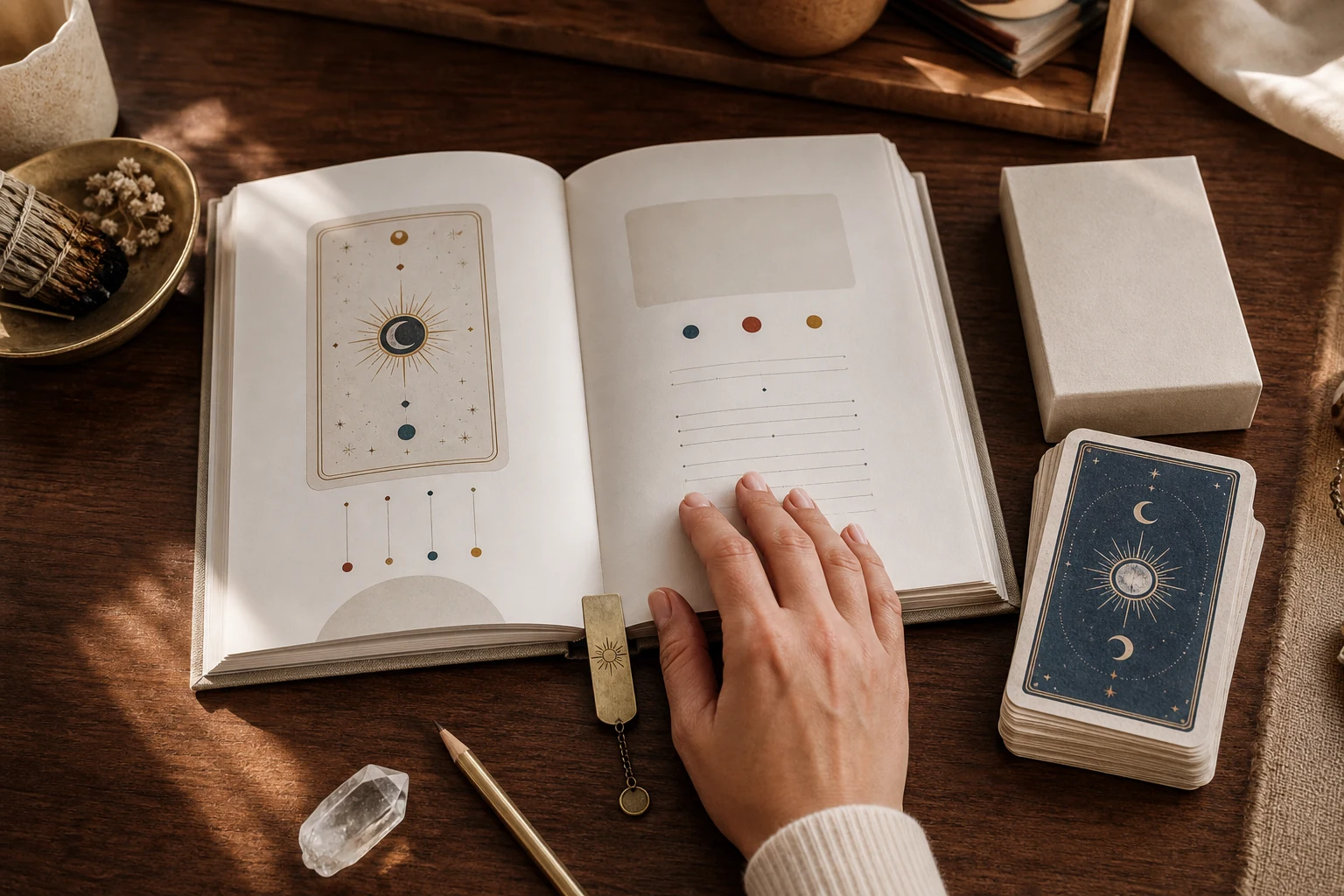 For learning a shared visual system: source a similar guided tarot study set
2. Motion and direction
Notice what the figures are doing: approaching, withdrawing, protecting, offering, or carrying something alone. A sequence may show more movement than one definition does. The Chariot followed by the Hanged Man may describe momentum meeting a necessary pause.
Direction can also show a change in the reading. A person who first faces the past and later turns toward a new path may reflect a shift in attention. Write what you can actually see before deciding what that shift means for the question.
3. Suit, number, and element
Suits show where the reading keeps gathering energy. Cups return to feelings and relationships. Swords bring communication, competing thoughts, or decisions. Pentacles move toward time, money, work, health, and what can be sustained. Wands often bring desire, initiative, tension, and momentum.
Numbers add another layer. Repeated twos may keep the focus on choice, balance, or two sides of a situation. Repeated eights may show effort, movement, skill, or a structure becoming harder to avoid. Use number and suit together; neither needs to carry the whole interpretation alone.
4. What happened between the pulls
Place each reading beside the message that arrived, the conversation that did not happen, the deadline that moved, or the feeling that settled after sleep. Cards show more when they are compared with life, not only with other cards.
If nothing changed, that matters too. The repeated card may be showing that the question is still in the same stage. You may need more information, a direct conversation, or simply enough time for the situation to move before another reading adds anything new.
How patterns can change a real reading
Love: mutual feeling or uneven effort?
A love reading may begin with the Two of Cups, move to the Six of Pentacles, and end with the Queen of Swords. Read together, the cards raise a practical question: is the connection becoming mutual, or does it now need a direct conversation about effort and expectations?
The sequence moves from connection, to exchange, to clear speech. Compare it with what the person has actually done. If you are unsure what to ask next, use these love tarot questions for relationship uncertainty.
Timing: is the situation waiting or developing?
Suppose the Hanged Man appears while you wait for an answer. A week later, Temperance appears, followed by the Three of Wands. That sequence may suggest a timing story: first a pause, then adjustment, then a wider view of what is approaching.
Ask what stage is visible now rather than forcing the cards into a date. Has someone requested more time? Has a practical condition changed? The reading can describe the timing while the calendar still depends on real people and events.
Career: expansion or a better-looking version of the same problem?
You ask about a new role and repeatedly see the Two of Wands, Eight of Pentacles, and Ten of Wands. The opportunity may offer growth, but the repeated work and burden imagery asks for specifics. What will you learn? What will you carry? Who shares responsibility?
Instead of treating the spread as a yes or no, use it to prepare three questions for the employer. The tarot pattern has already done something useful: it has shown you where enthusiasm needs better information.
Keep a simple tarot pattern log
You do not need a complicated tracker. Date each reading and keep the entry short enough that you will actually return to it. This five-line version is enough:
- Question and date.
- Cards pulled and their positions.
- The first repeated image, number, suit, or movement you noticed.
- What changed in real life before the next reading.
- One new question or action the pattern suggests.
If the blank page slows you down, use this simple tarot journal method. It shows exactly what to record after one pull. Pattern reading begins when you place those short entries beside one another.
When repetition deserves more attention
Give a repeat more weight when it appears across separate days, answers related questions, and still fits the facts. A card that moves from obstacle, to advice, to outcome may show your relationship to the issue changing.
Give it less weight when you have pulled many clarifiers in one sitting, reshuffled the same question repeatedly, or started seeing every color and object as a signal. In that moment, close the deck and write what answer you were hoping to receive. That sentence is often the most useful note on the page.
Turn the pattern into a better next question
A pattern should improve the next question, not trap you in the old one. Move from “What does this repeat mean?” to a question that gives the reading somewhere useful to go.
- What part of this pattern is already visible in real life?
- What is changing, and what is staying the same?
- What conversation or information would bring the most clarity?
- What may be developing if the current direction continues?
- What can I choose before I know the full outcome?
For a quick way to work with one of those questions, return to the one-card method for love, work, timing, and everyday decisions. One focused pull often reveals more than another large spread.
Track one card a day for a week
Patterns become visible when readings are dated. Start with the free 7-Day Tarot Reflection Guide and keep one short entry each day. By the end of the week, you can compare the questions, images, emotional shifts, and small actions without turning the practice into a long assignment.
Where pattern tracking can go next
A future Opal Arc Tarot companion can make this kind of review easier without replacing your judgment. Reading history could compare repeated cards, show how a question changed, and summarize themes across love, career, timing, and daily guidance.
The useful technology is not another instant answer. It is a clearer view of the story your own readings have been building. Keep the dates, keep the questions, and let repetition become context for the next choice.