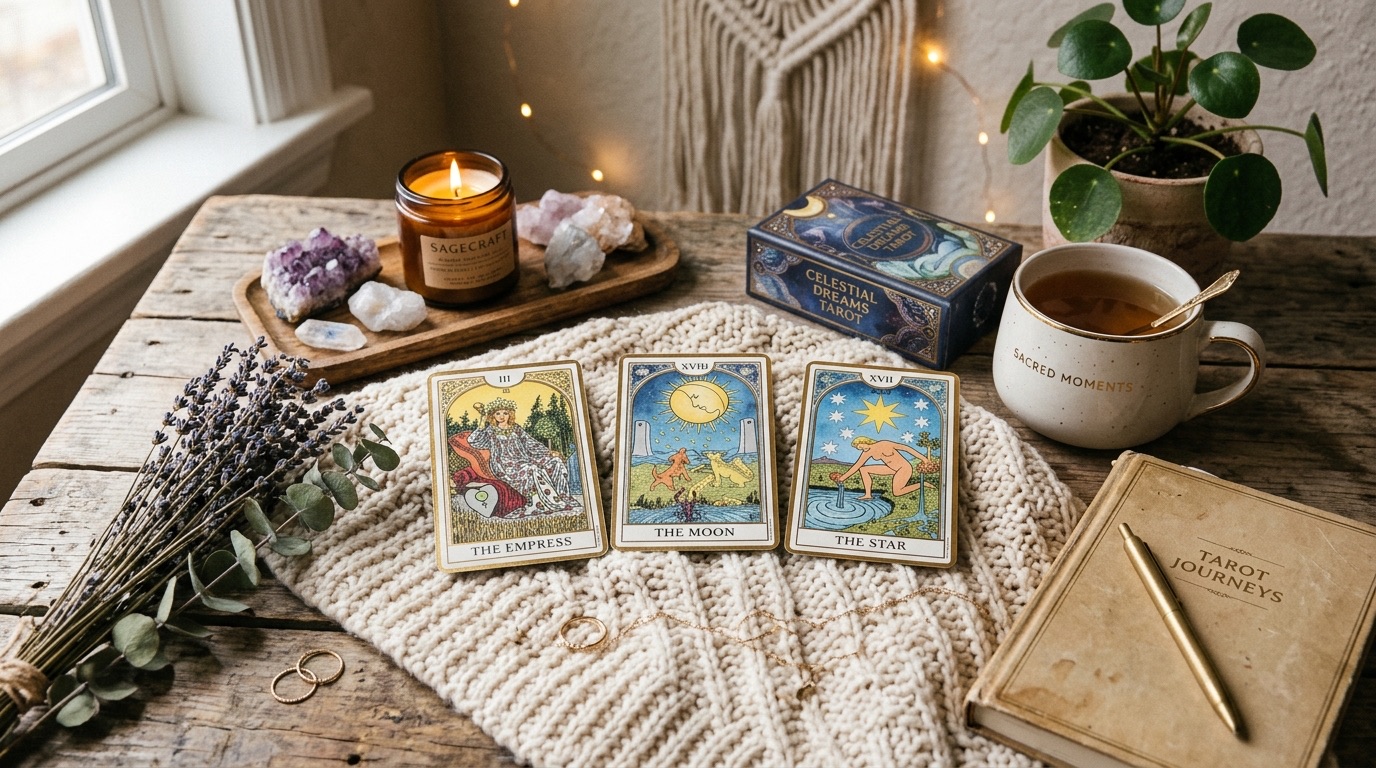
You can compare twenty tarot decks and still have no idea which one belongs in your hands. One has the classic images everyone teaches. One comes with a workbook. Another is so beautiful that you can already picture it beside your journal, but you cannot tell what is happening in half the cards.
For most beginners, the best first deck has readable scenes, a useful guidebook, and artwork you want to revisit. Choose a classic Rider-Waite-style deck if you want the easiest learning path, a guided set if blank meanings make you freeze, or a modern illustrated deck if you understand images before keywords.
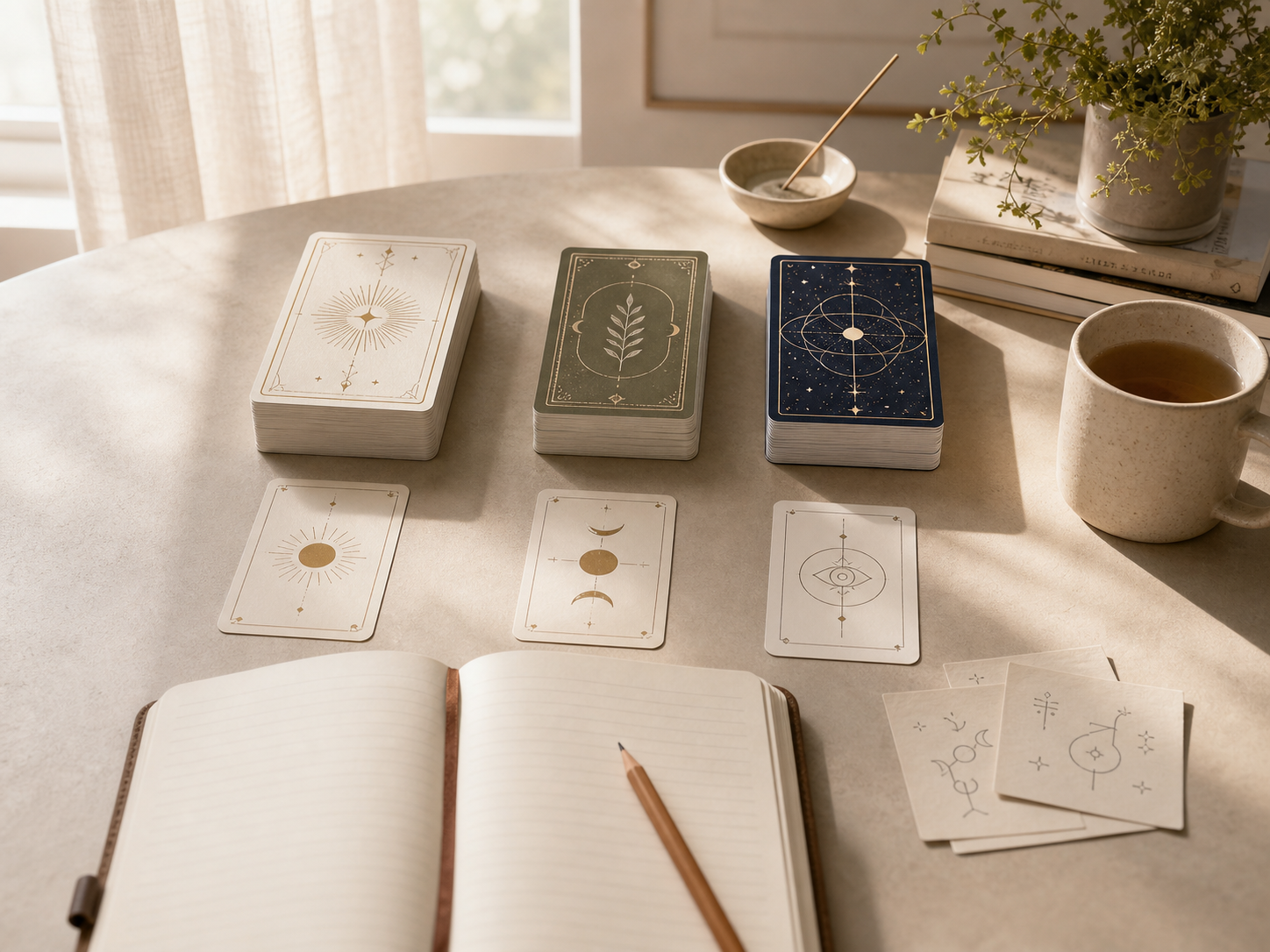
Choose the deck that matches how you learn
The word beginner-friendly can hide three different needs. You may want a deck that connects easily to books and classes. You may want more structure because seventy-eight cards feel like too much to hold in your head. Or you may want expressive scenes that let you begin with what you see.
- Choose classic imagery if you like learning a system step by step.
- Choose a guided set if you want the cards, book, and exercises to work together.
- Choose modern illustrated scenes if posture, color, and atmosphere help you understand a message.
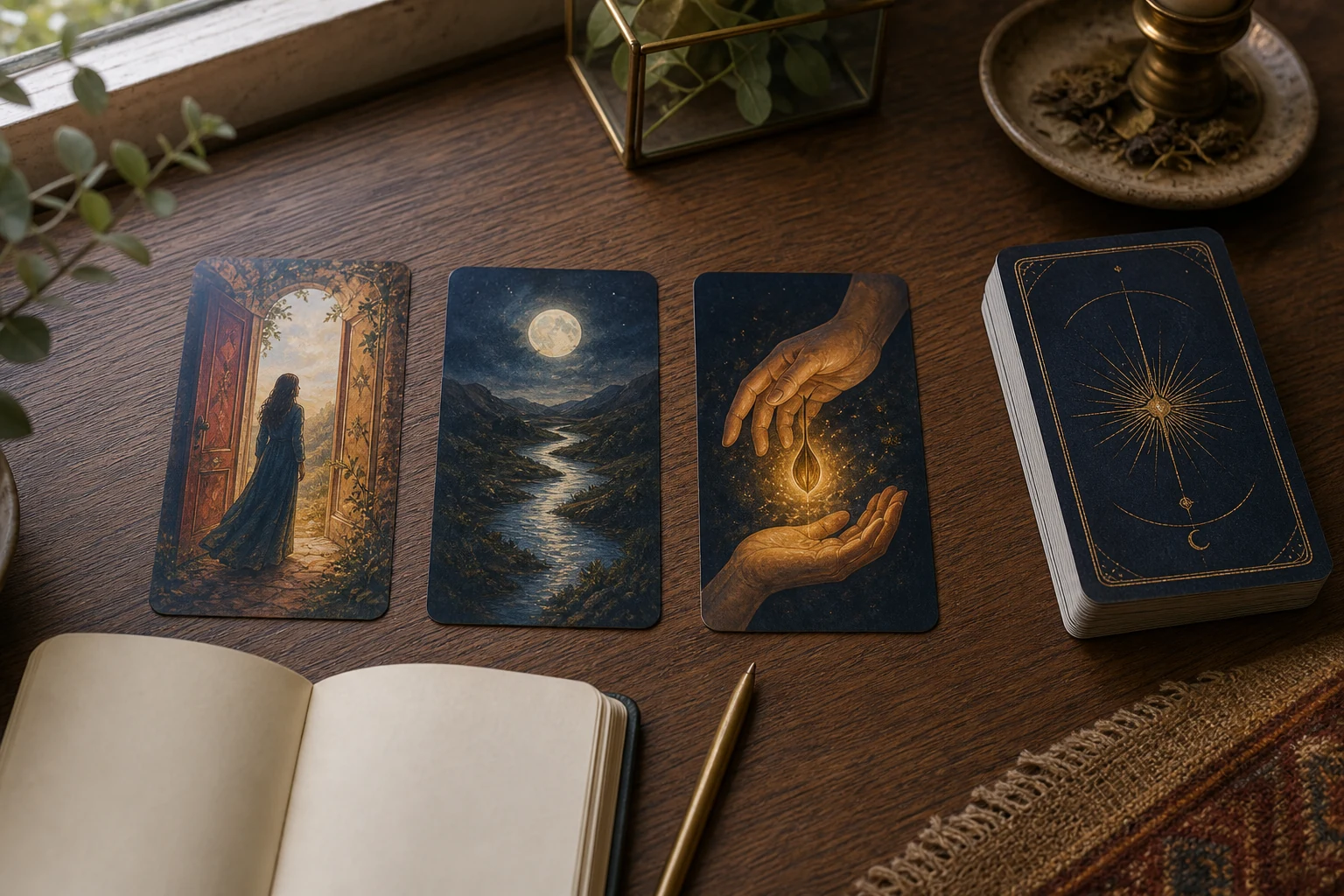
This article contains Amazon affiliate links. As an Amazon Associate, Opal Arc earns from qualifying purchases. The recommendations are organized by learning need, and the styled images are editorial illustrations rather than Amazon product photos.
Three First-Deck Directions
Start with the kind of support you need
These are three different ways into tarot, not a ranking. Choose the one that makes your next reading easier to begin.
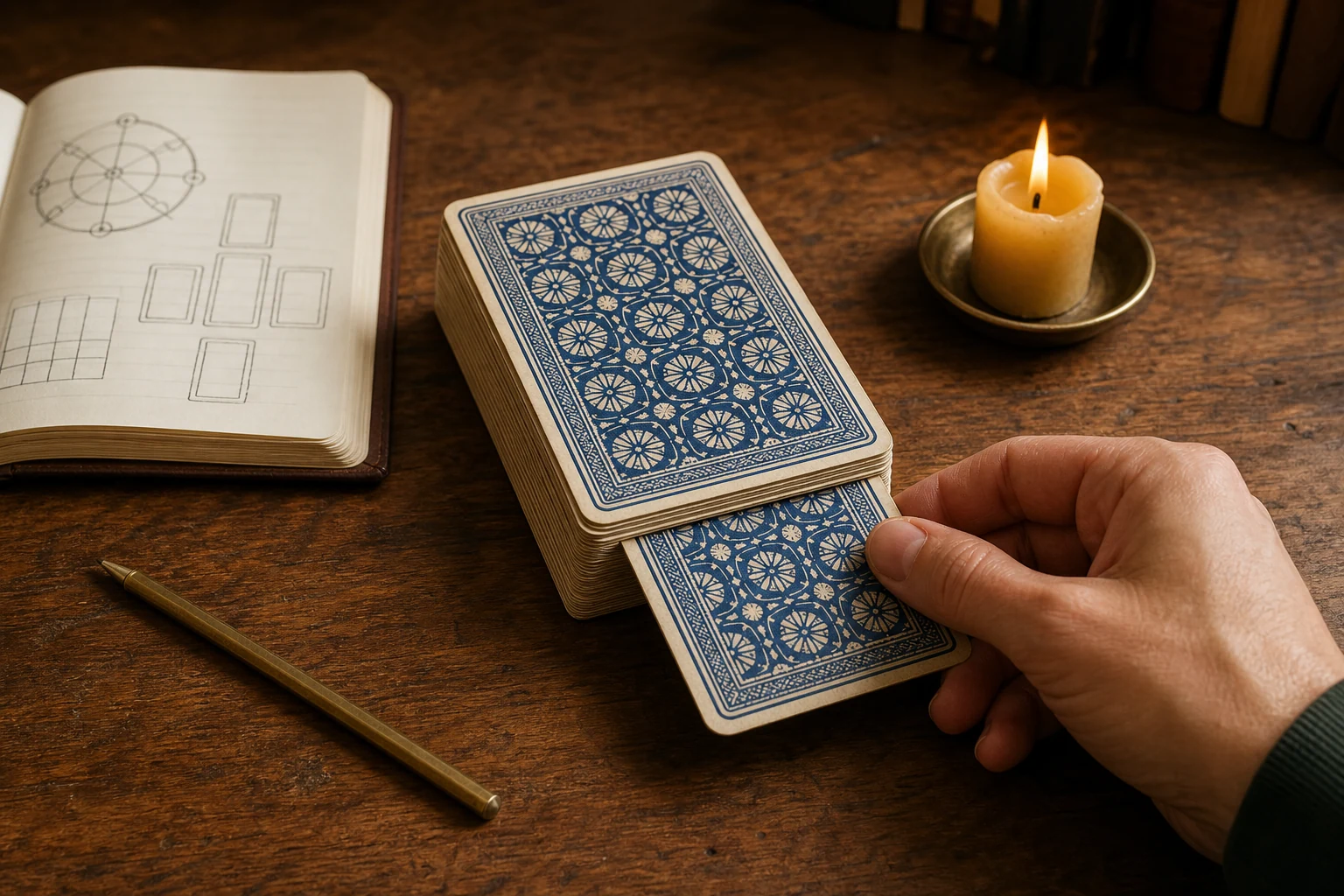
Shared tarot language
Rider Tarot Deck
A practical first choice when you want card meanings, books, and lessons to connect to the same familiar imagery.
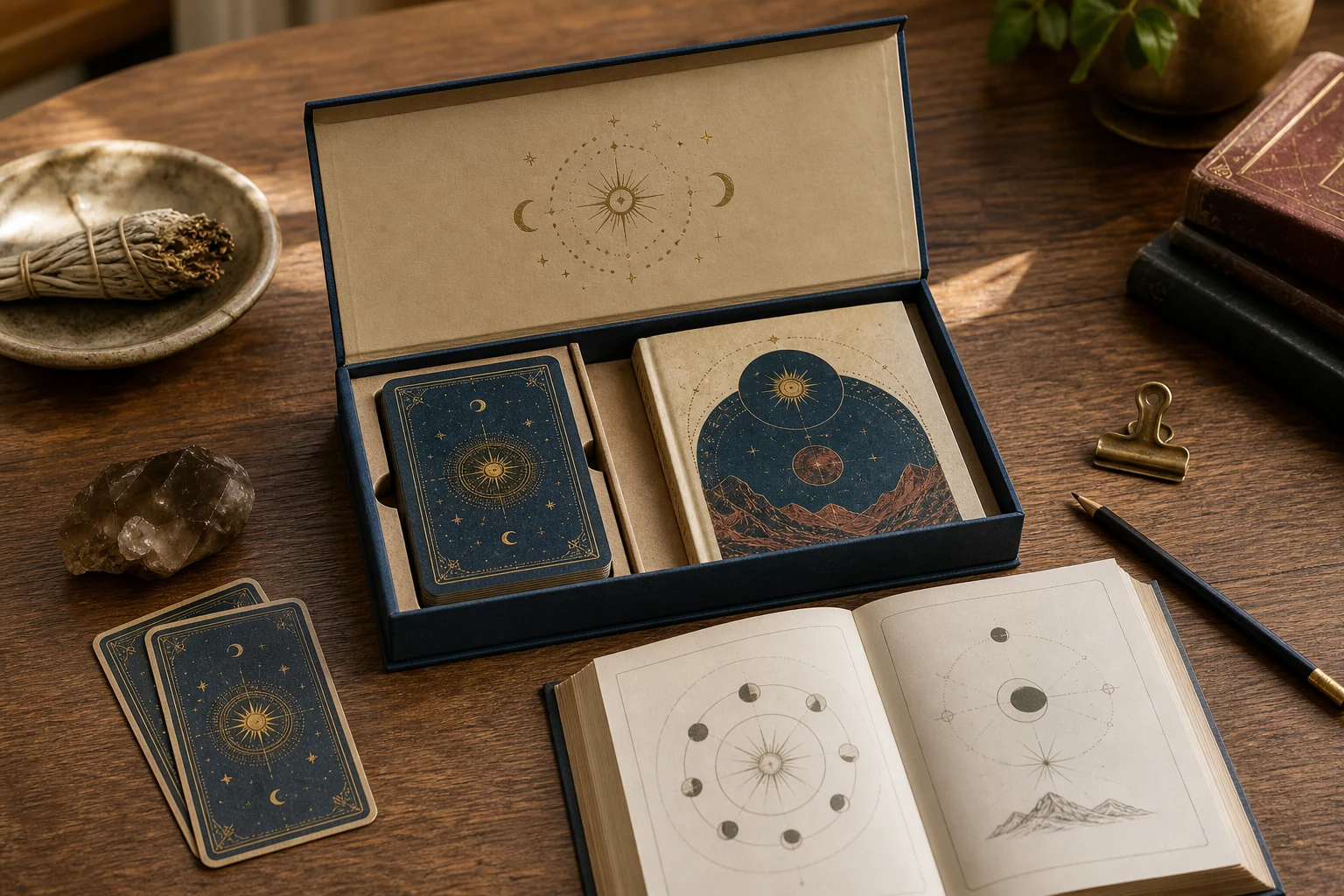
Guided structure
Guided Tarot Box Set
Useful when you want a deck and learning path together instead of assembling your own study system.
Modern visual storytelling
Light Seer's Tarot
A strong fit when facial expression, movement, color, and atmosphere help you read before you memorize.
Choose classic imagery if you want the clearest learning path
A Rider-Waite-Smith-based deck is useful because so many books, teachers, and card references assume you can see its scenes. When a guide discusses the figure walking away in the Eight of Cups, or the two paths in the Two of Wands, the image in front of you matches the lesson.
Choose this direction if you enjoy learning a shared structure and want outside resources to stay easy to follow. The artwork may feel less personal at first, but it gives you a strong base for later decks.
Choose a guided set if card meanings make you freeze
Some readers pull a card, open three websites, compare five meanings, and end up less certain than when they began. A guided set gives the learning process an order: observe the image, read a focused explanation, try a question, and make a short note.
This direction suits you if blank pages feel intimidating or you tend to postpone practice until you know more. Check that the book teaches through examples and questions, rather than giving you a long list of keywords with no way to use them.
Choose modern illustrated scenes if images speak first
A modern deck can be a good first deck when its scenes still show movement, tension, choice, and consequence. You may not remember the traditional meaning yet, but you can notice that someone is looking back, protecting their chest, stepping through a doorway, or refusing an offered cup.
Look beyond the deck's five prettiest cards. View several challenging cards too: the Tower, Five of Pentacles, Seven of Swords, and Ten of Wands. A useful deck should help you read discomfort and change, not turn every situation into the same reassuring message.
What to check before you buy
- Look at a full flip-through, not only the box and best-known cards.
- Check whether the Minor Arcana contains scenes or only repeated suit symbols.
- Read a sample guidebook entry and see whether it helps you answer a question.
- Check the card size if you have small hands or expect to shuffle often.
- Choose a finish you will use; highly glossy cards can be harder to shuffle and photograph.
One practical test is enough: imagine pulling the card before work, looking at it for two minutes, and writing three lines. If the deck still feels inviting in that ordinary scene, it is more likely to become part of your life.
A journal matters more than a second deck
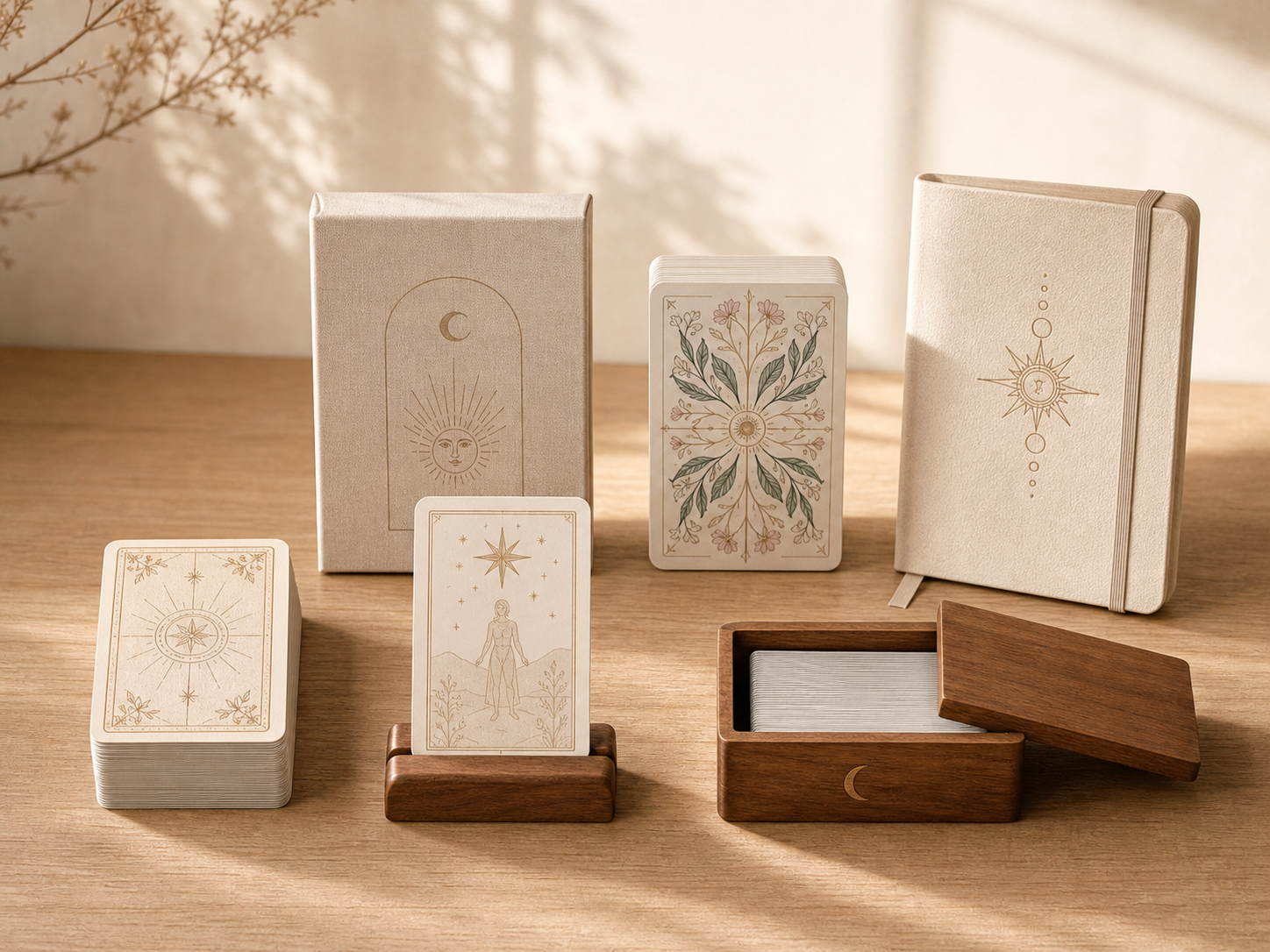
A second deck gives you more images. A journal shows you how you actually read. Record the question, the card, the detail you noticed first, and what happened after the reading. Within a few weeks, you will see which questions repeat and which meanings become personal through experience.
If a blank notebook makes you hesitate, a Daily Tarot Journal offers a ready-made place for one-card notes. Keep the page light enough that you can finish it even on a busy day.
Keep the rest of the setup small
You do not need a complete altar before the first reading. A deck, its guidebook, a pen, and a page are enough. Add an object only when it solves a real problem in the practice.
A wooden card stand is useful if leaving one card visible helps you remember the question. A wooden tarot storage box is useful if your deck needs a fixed home. Neither item makes a reading better by itself.
How to begin after your deck arrives
Do not begin by memorizing seventy-eight definitions. Begin with one card and one question from your actual day. Ten quiet minutes will teach you more about whether the deck works for you than another hour of comparison shopping.
- Ask: What needs my attention today?
- Pull one card and describe the scene before checking the book.
- Write the first figure, object, color, or movement that caught your eye.
- Read the guidebook and note one idea that fits the situation.
- Choose one action to take before the next reading.
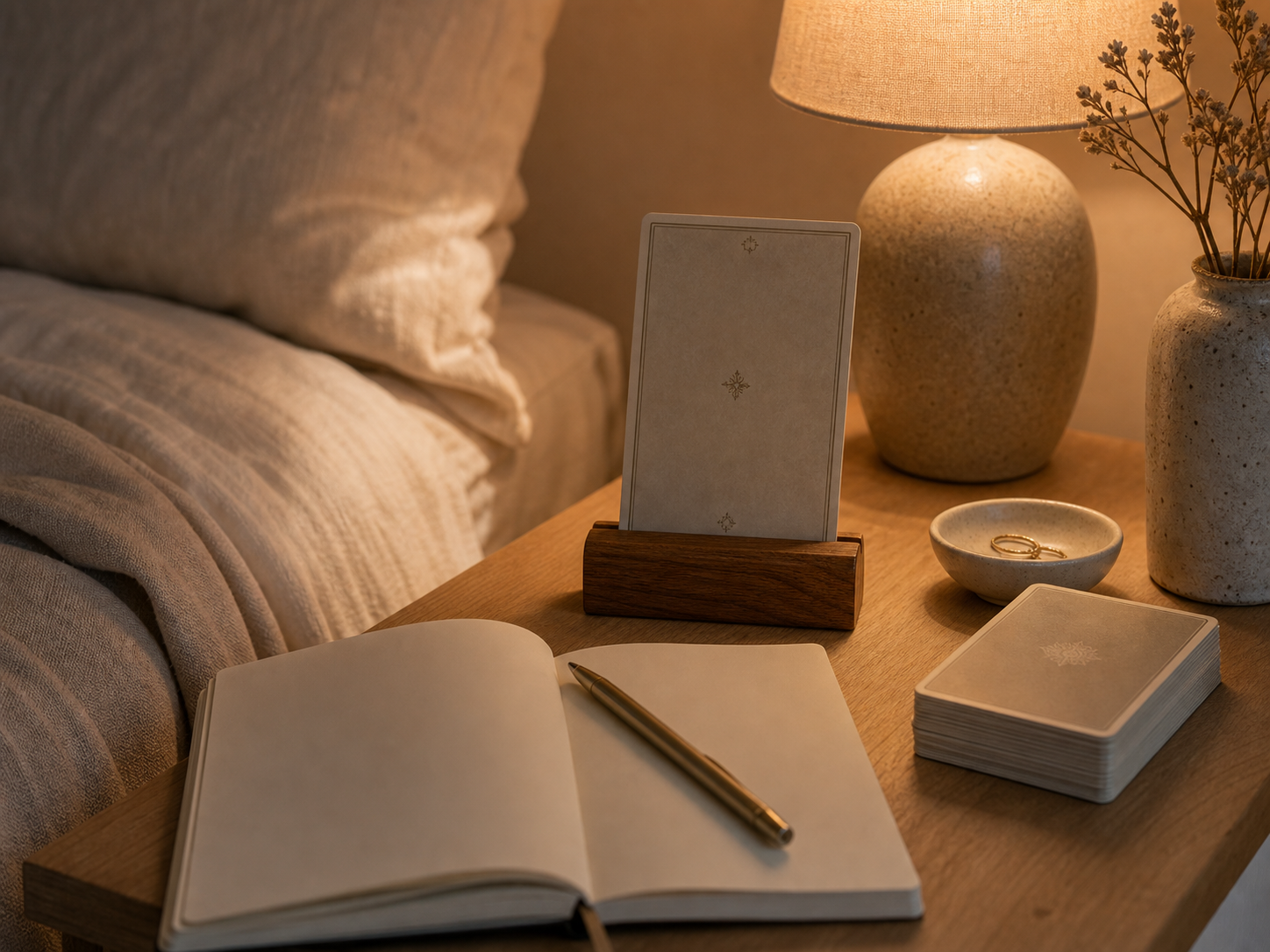
For the full one-card process, read how to use tarot for self-reflection when you need direction. It shows how to place the card beside what has actually happened in love, work, timing, or an everyday decision.
When to stop shopping and start reading
Comparison becomes unhelpful when every new deck makes the previous one seem wrong. If you have found one deck with readable scenes and a guidebook you understand, let seven readings answer the question that product pages cannot: do you want to return to these cards?
Wait before buying a second deck. Notice which cards confuse you, which images stay in your mind, and whether the book helps you move from meaning to action. Those notes will tell you what a future deck needs to add.
Quick questions before you choose
Does my first deck have to be Rider-Waite-Smith?
No. A modern deck can work well if its scenes remain readable and its guidebook explains how the cards connect to the wider tarot system. Rider-Waite-Smith imagery simply makes books, classes, and online references easier to compare.
Do I need a full guidebook?
A small booklet is enough if it gives more than keywords. Look for a short description of the scene, the card's main tension or opportunity, and a question you can apply. A separate guidebook becomes useful when you want history, symbolism, or more examples.
Should I learn reversals immediately?
You can begin with upright cards until the deck feels familiar. Reversals add useful nuance, but they also add another decision to every pull. Learn them when you are curious, not because the first reading needs every possible layer.
Use your first deck for seven days
If the deck has arrived and you are still wondering what to ask, begin with the free 7-Day Tarot Reflection Guide. It gives each daily pull a small page: the situation, the card, what you noticed, and one next step. Download the free PDF instantly—no email required.
After the week, use what to write in a tarot journal to build a longer record. A future Opal Arc Tarot companion can help compare repeated cards, reframe vague questions, and track themes across love, work, and timing readings; your dated notes are what make that pattern visible.