
You have a deck, a journal, three crystals, a cloth, a candle, and nowhere comfortable to put your elbows. A useful tarot setup is usually smaller than the one shown in starter-kit photos.
Begin with two things: a deck you can read and a place to record what happened. Add the rest only when it solves a problem you have actually noticed, such as forgetting a daily card, damaging the deck box, or getting lost in too many meanings.
Start with two essentials: a readable deck and a place for notes
Your first deck should let you describe what is happening before you reach for a definition. Look for scenes with visible choices, movement, relationships, and consequences. If you are still choosing, use the first-deck guide to compare classic imagery, guided sets, and modern illustrated decks.
The second essential is not necessarily a special tarot journal. A notebook, notes app, or printable page works if you will use it. Record the question, the card, the detail you noticed first, and what happened next. What to write in a tarot journal gives you a six-line method that does not turn a one-card pull into homework.
Add one tool only when it solves a real problem
Before buying an accessory, finish this sentence: I keep having trouble with... The answer tells you whether you need another tool or simply need more time with the deck you already own.
If meanings send you to five browser tabs, add structure
A focused guidebook or guided deck set helps when the obstacle is interpretation. Look for explanations that connect the image to an actual question, not pages of disconnected keywords. One usable example is more valuable than twenty meanings you cannot remember.
If the daily card disappears from your mind, add a stand
A small card stand gives one pull a visible place on a desk or shelf. It is useful when you want to return to the message after a meeting, a conversation, or a change of mood. It is less useful if displaying the card makes a private reading feel exposed.
If the original box is failing, add storage
Keep the deck in its original box while that box still closes well. Add a wooden box or fabric pouch when cards are bending, slipping out, or living loose in a drawer. Measure the deck and booklet together; a beautiful box that is two millimeters too narrow is just another object to store.
If the table catches card edges, add a cloth or tray
A cloth earns its place when it protects cards from a rough surface, defines a small reading area, or makes a shared table easier to clear. Choose tightly woven cotton or linen without beads, loose fringe, or raised embroidery where cards need to slide. A flat tray can do the same job for a one-card setup.
What can wait
Candles, crystals, bowls, multiple decks, and altar decor may become meaningful parts of a practice. They are not the admission price. Add them because you use them, enjoy them, or attach a personal ritual to them, not because the table looks unfinished without them.
- A second deck can wait until you can name what the first deck does not give you.
- A reading cloth can wait if your table is clean, smooth, and easy to clear.
- A candle can wait if lighting it adds another task instead of helping you settle.
- Crystals and bowls can remain decorative unless they have a role you actually repeat.
Choose materials that will still feel good after fifty readings
A calm setup is partly visual, but materials decide whether it remains pleasant to use. Highly glossy cards can cling together under warm hands. A loose-weave cloth can catch corners. A tall stand can cover the lower part of the image, while a shallow groove may let a heavy card fall forward.
For storage, check internal measurements rather than the outside dimensions. Allow room for the guidebook only if you use it with every reading. Smooth unfinished or matte-finished wood usually ages more quietly than mirrored hardware, glitter, or thick ornament that competes with the cards.
Build a small setup that works together
You need less surface than you may think. Place the deck within easy reach, leave one card-width of clear space in front of you, and keep the notebook on the side of your writing hand. A stand belongs behind that clear space, where it can hold the card after the reading instead of interrupting the spread.
- Read: one deck with images you can describe.
- Record: one page, pen, or notes app you can reach without leaving the table.
- Return: one stand only if keeping a card visible changes how you use the message.
- Protect: one box, pouch, cloth, or tray only when the current setup is causing wear.
For a simple reading, shuffle, pull one card, write four lines, then place the card on the stand while you finish the day. The full process takes about five minutes. If you need a reading method rather than more equipment, follow the one-card practice for love, work, timing, and ordinary uncertainty.
Choose for the kind of reader you are
You are learning card meanings
Prioritize a readable deck and one strong guidebook. Skip the stand and special storage until you know whether you prefer daily pulls, longer spreads, or occasional readings. Your learning method matters more than the table styling.
You pull one card most mornings
Prioritize speed: deck, short notes page, and a stand if you like carrying one message through the day. Keep everything within one arm's reach so the practice survives an ordinary busy morning.
You compare love, timing, or career readings over time
Prioritize dated notes and consistent storage. The useful object is the one that helps you return to earlier readings without losing pages or forgetting which deck you used. Reading tarot as a pattern language shows how those dated notes reveal recurring cards, tensions, and choices.
This article contains Amazon affiliate links. As an Amazon Associate, Opal Arc earns from qualifying purchases. These recommendations are organized by the problem each tool solves; no live price, availability, rating, or review claim is made here.
The Useful Tarot Edit
Four tools with four different jobs
Choose the role you need now. You do not need the complete set to begin reading.
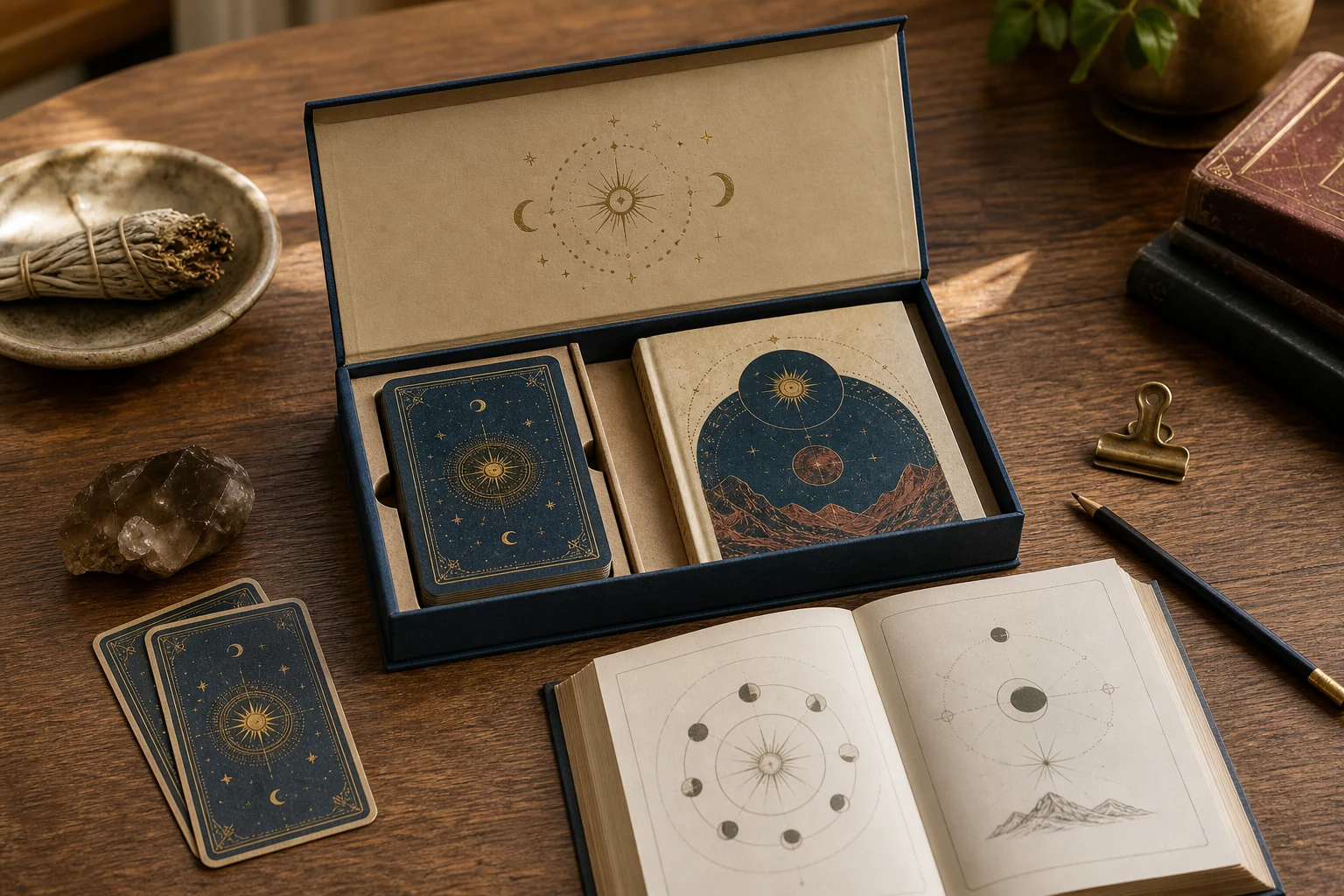
Deck and learning structure
Guided Tarot Box Set
A deck-and-book option for readers who want one organized place to learn meanings and begin simple readings.
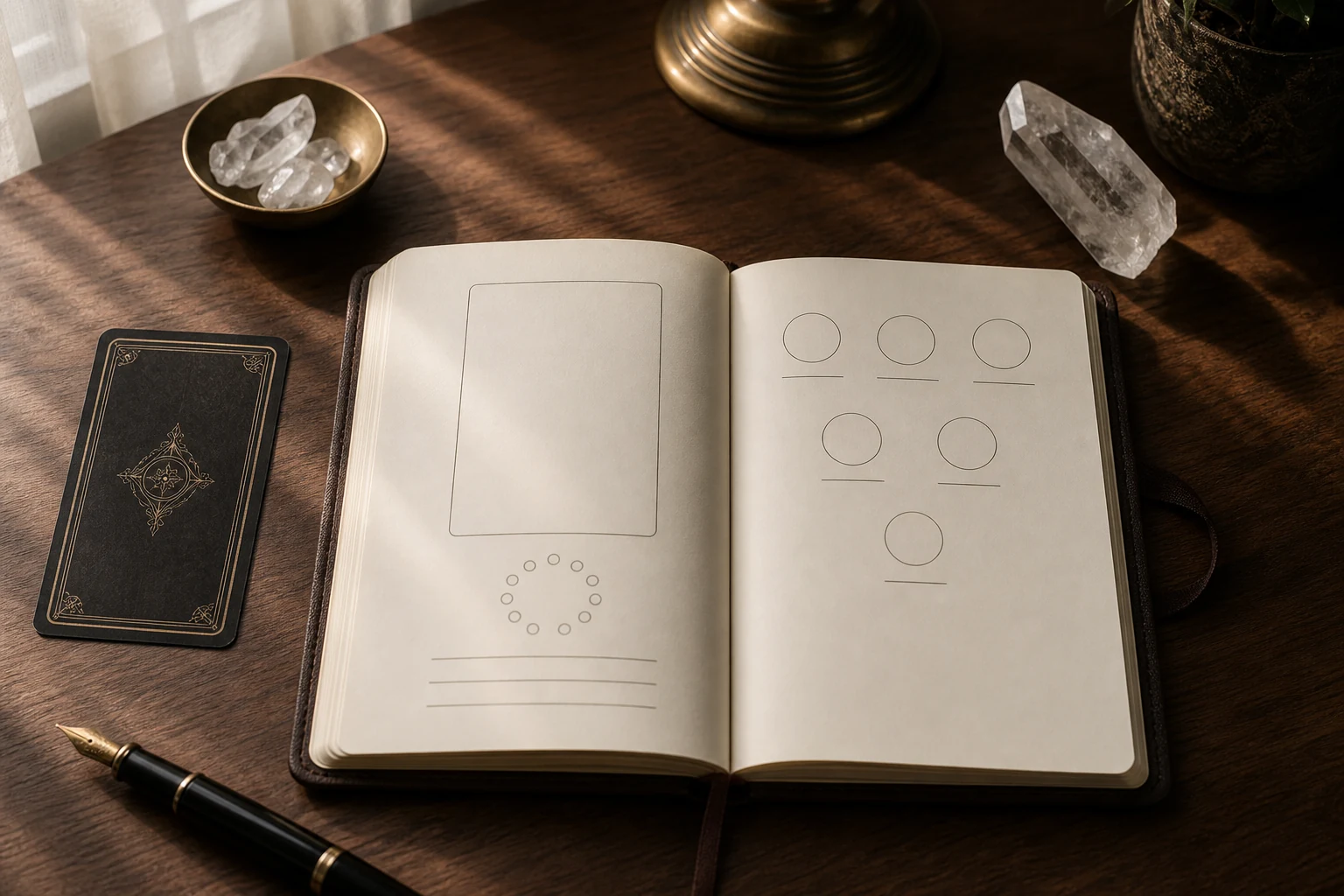
Ready-made notes
Daily Tarot Journal
Useful when a blank notebook creates more decisions than it removes and you want a repeatable place for short entries.
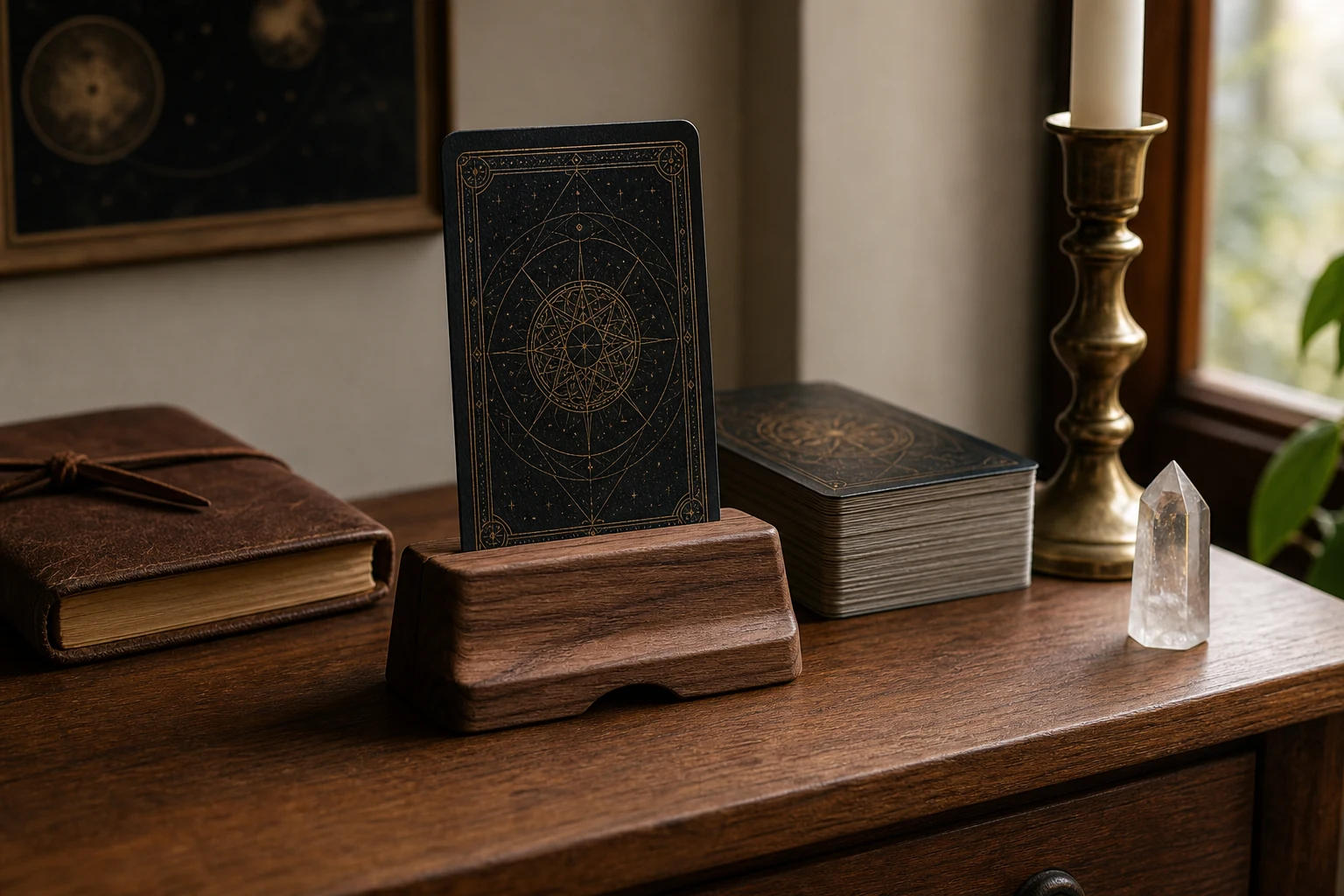
Keep one card visible
Curawood Tarot Card Holder Stand
A small display support for readers who revisit one daily card after the reading is finished.
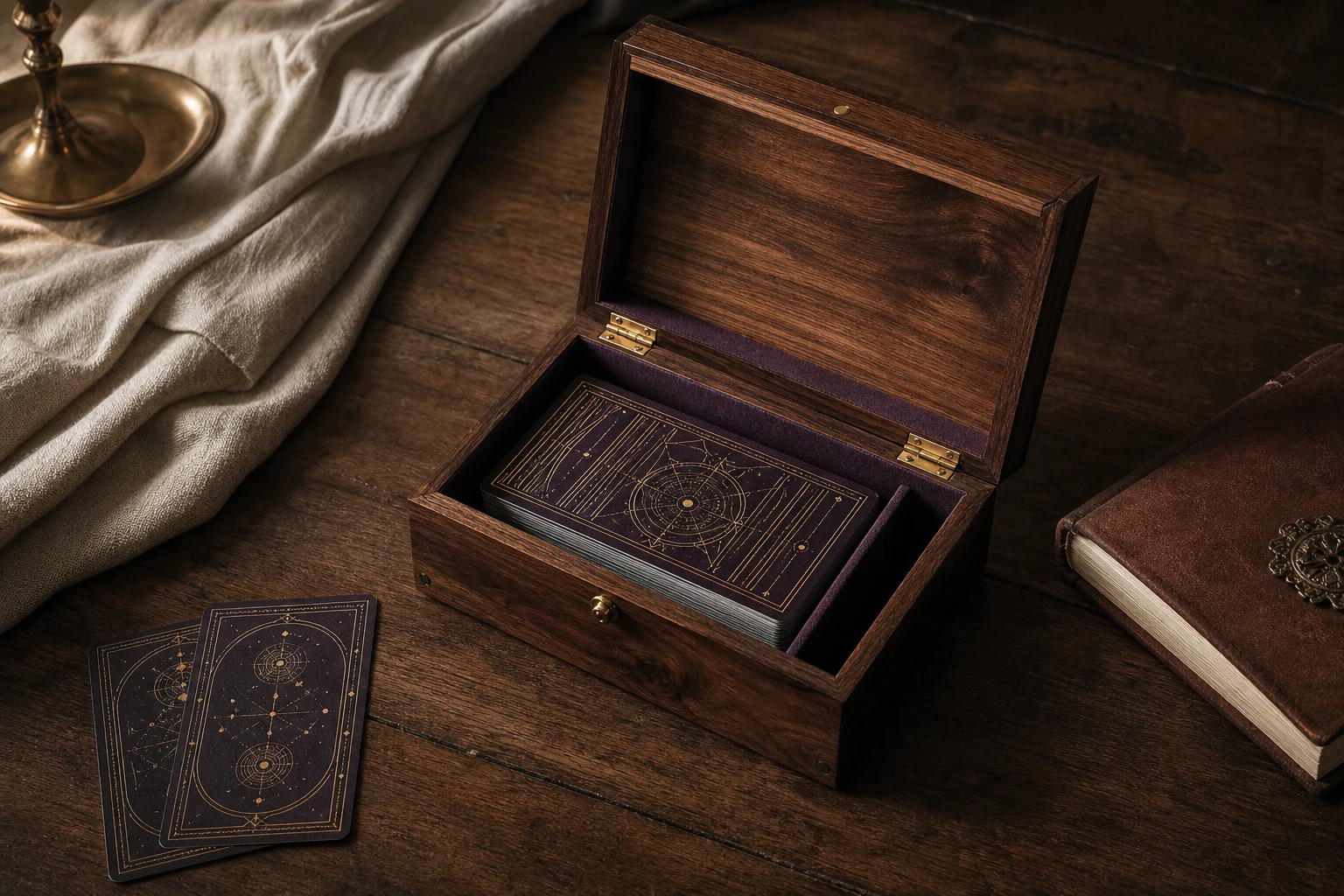
Give the deck a fixed home
CRAFTERIAN Wooden Tarot Card Box
A storage option for a deck whose original box no longer protects the cards or stays closed.
Use the setup for seven days before you add anything else
Seven readings will tell you more than another hour of shopping. Notice where the practice slows down: choosing a question, understanding the image, finding a page, keeping the card in view, or putting everything away. That repeated moment points to the next useful tool.
A future Opal Arc Tarot companion is being designed to help with the part physical tools cannot hold on their own: reframing a vague question, keeping reading history, and comparing repeated cards across love, career, timing, and daily guidance. The dated notes you make now are the beginning of that pattern record.