If you want a first deck that feels current—emotion on the face, movement in the body, color that carries mood—Light Seer's Tarot is one of the decks people reach for. The question is not "Is it beautiful?" The useful question is: will this imagery help you learn to read, or will it only look good on your desk?
This review is for learners. It stays practical: who the deck fits, who should skip it for now, how reading with it tends to feel, how it sits next to Rider-Waite learning, and one one-card practice you can do this week.
This article contains Amazon affiliate links. As an Amazon Associate, Opal Arc earns from qualifying purchases. Product details can change, so check the Amazon page for current information at purchase time.
What Problem This Deck Solves
Many beginners stall for one of two reasons.
They open a classic deck and feel distant from the scenes. Or they buy a highly styled modern deck and freeze because the pictures feel emotional—but they still don't know what to do after the pull.
Light Seer's Tarot is built for readers who learn through visual storytelling: posture, expression, atmosphere, and relationship between figures. It can help you start with what you see, then add structure. It does not replace practice. It does not guarantee easy answers. It gives you a clearer doorway into noticing.
If you want a deck that supports look → note → next step, keep reading.
Who Light Seer's Tarot Is For
This deck is a strong fit if you:
- Prefer contemporary, illustrated scenes over antique or woodcut-style art.
- Read emotion and body language faster than keyword lists.
- Want a deck you will actually pick up for daily or weekly one-card pulls.
- Are willing to keep a small notebook habit, even five lines.
- Already know (or are ready to learn) that modern decks still benefit from a simple method.
It also works well as a second deck if you learned on Rider-Waite imagery and now want a more personal visual language—without abandoning the idea of structure.
Who Should Skip It (for Now)
Skip it—or wait—if you:
- Need every card to match classic Rider-Waite teaching examples exactly, because you learn mainly from traditional books and class materials.
- Want a deck that feels deliberately sparse and symbolic rather than emotionally expressive.
- Are hoping a beautiful deck will "read itself" without questions, notes, or follow-through.
- Feel overwhelmed by strong contemporary art and need quieter images while you build confidence.
There is no moral ranking here. Fit matters more than trend.
Common misread: "If I love the art, I'm ready."
Loving the art is a good sign you will practice. It is not the same as having a method. Buy for fit and commit to one repeatable pull process. Otherwise the deck becomes décor.
What Reading with It Feels Like
With Light Seer's Tarot, many learners start by noticing feeling before they reach for a guidebook line. A card may land as "tired but still moving," "guarded," "hopeful in a small way," or "too much noise." That is useful—if you turn the feeling into a clear note.
A strong session usually looks like this:
- You ask one ordinary question.
- You look at the card before you open anything.
- You write what you see in plain words.
- You check a short meaning only after your own note.
- You choose one next step you can do in real life.
When the session goes sideways, it is usually because the question was vague ("What will happen?") or the note stayed poetic and never became an action.
Light Seer's strength is invitation. Your job is translation: image → situation → one grounded move.
Beginner Fit vs Rider-Waite Learners
If you are brand new
Light Seer's can be beginner-friendly when you treat it as a practice deck, not a vibe machine. Pair it with a simple one-card method and a short journal template. Use the guidebook as support, not as a substitute for looking.
If you are learning with Rider-Waite resources
Classic RWS-based decks are still the easiest bridge to many books, teachers, and shared card references. If your main study path is "open the lesson, find the matching scene," a classic deck may feel clearer day to day.
That does not make Light Seer's "wrong." It means you may want one of these paths:
- Start with RWS for shared language, then add Light Seer's for personal reading.
- Start with Light Seer's for engagement, and use Opal Arc's plain-language card guides when you need structure.
- Use both: RWS for study nights, Light Seer's for daily pulls.
Honesty helps: contemporary art can make you feel fluent faster. Shared classic imagery can make outside resources easier to follow. Choose the friction you are willing to carry.
How to Practice with It This Week
Do this once a day for seven days—or three times this week if daily feels heavy.
One-card practice (10 minutes)
- Question: Write one clear question you can act on. Example: "What needs my attention in this conversation?" Avoid yes/no fortune questions.
- Shuffle until the deck feels mixed and you feel ready to stop.
- Draw one card. Place it face up.
- Notice first: Before any book, write 2–3 concrete observations (posture, color mood, distance between figures, what feels loud). Keep notes private and practical.
- Meaning second: Read a short guidebook note or a trusted plain-language meaning. Circle only what matches your situation.
- Next step: Write one action for the next 48 hours. Small and real.
If you want a fuller walkthrough of this loop, see How to Do Your First One-Card Tarot Pull.
Try this today
Pull one card with Light Seer's Tarot (or the deck you already own) and complete this five-line note:
- Question:
- Card:
- What I see:
- What it may mean in my situation:
- One next step in 48 hours:
Buying Notes (What to Check, Without the Noise)
Before you buy, check the listing for:
- What's in the set: Confirm you are getting the full deck and guidebook package you expect.
- Card handling: Modern illustrated decks vary in size and finish. If you have small hands or prefer easy shuffling, read recent customer details about card size and stock feel—without treating any single review as proof.
- Guidebook use: Look for a companion book that helps you practice, not only keyword piles.
- Learning path fit: If you rely heavily on classic RWS course materials, decide whether this will be your primary study deck or a practice companion.
Do not buy from fear of missing out. Buy because the learning style matches how you actually read.
Where to Buy
Styled images below are editorial use scenes of the deck in practice, not Amazon product-page screenshots. Always verify current product details on Amazon before you buy.
Source Similar
Three Light Seer's options
Start with the standard deck for practice. Add the companion book for deeper study nights, or choose the pocket edition if you want the same imagery in a smaller format.

Primary deck
Light Seer's Tarot (deck & guidebook)
The standard 78-card deck and guidebook set for readers who learn through contemporary visual storytelling.
Optional companion
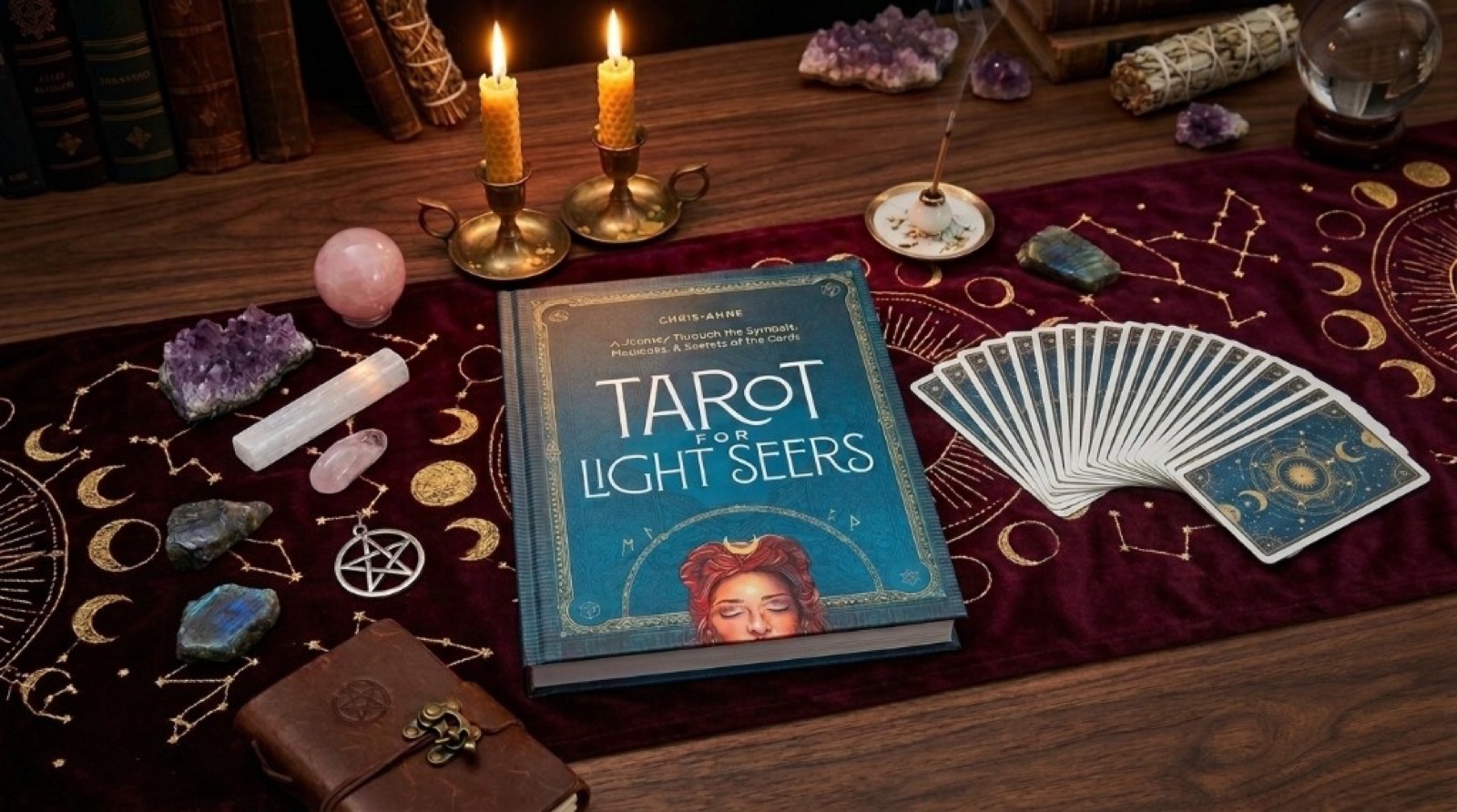
Tarot for Light Seers
A fuller walkthrough of symbols, Rider-Waite parallels, prompts, and spreads—useful after you are already practicing with the deck.

Pocket format
Light Seer's Pocket Tarot
The same Light Seer's imagery in a smaller deck-and-guidebook set—choose this when portability matters more than full-size handling.
If you are buying your first modern practice deck, start with the standard size. Use the companion book when you want longer study nights. Choose the pocket edition only if you know you need a smaller format.
Keep Your Practice Simple
A deck only helps if you return to it. If you want a light daily structure, start with the free 7-Day Tarot Reflection Guide: one card a day, one clear journal question, and one grounded next step.
If you want printable pages for questions, cards, and weekly review, see the Opal Arc Tarot Journal Starter.
Quick FAQ
Is Light Seer's Tarot good for beginners?
It can be—if you pair it with a simple method and short notes. Beauty alone is not a beginner system.
Can I learn tarot with Light Seer's if most books use Rider-Waite images?
Yes, with a plan. Use this deck for practice pulls, and use plain-language meanings or a classic reference deck when a lesson depends on traditional scenes.
Do I need Light Seer's as my first deck?
No. Some beginners learn faster on classic imagery. Choose the deck you will practice with honestly.
Should I buy extra accessories with the deck?
Not required. Start with the standard deck and a notebook. A deeper companion book is optional after you are practicing; a pocket edition is a format choice, not a learning requirement.
Is a modern deck "less real" than a classic deck?
No. Decks are tools. Clarity comes from questions, observation, and follow-through.
Closing: One Grounded Next Step
Decide your lane today:
- If Light Seer's matches how you see and feel stories, make it your practice deck for the next seven pulls.
- If you need tighter matching to classic study materials, keep RWS as your study deck and treat a modern deck as optional.
Then do one pull before the day ends. Write five lines. Take one small action within 48 hours. That is how a deck becomes useful.