This article contains Amazon affiliate links. As an Amazon Associate, Opal Arc earns from qualifying purchases.
A warm bedroom ritual is not a performance of perfect sleep. It is a small way to let the day end. When the room is bright, cluttered, and full of unfinished signals, the mind keeps reaching for one more task, one more message, one more decision. A softer bedroom gives the body a different instruction: you can stop now.
The most useful evening rituals are ordinary enough to repeat. They do not need a long checklist, a luxury room, or a complete personality change. They need a few reliable cues: lower light, calmer surfaces, one tactile layer, a scent you associate with evening, and a tiny closing practice that helps your attention come back home.
Let the bedroom become a threshold
Think of the bedroom as the room that receives you after the public part of the day. It does not need to be visually perfect. It needs to feel less demanding than the rest of the house. A threshold ritual works because it gives the room a before and after: before, the day is still open; after, the atmosphere has changed.
Begin with one visible shift. Turn off the overhead light. Place your phone somewhere that is not the first thing your hand finds. Pull the blanket into place. Clear the bedside surface enough that your eyes have somewhere to rest. These are small actions, but they speak in a language the body understands.
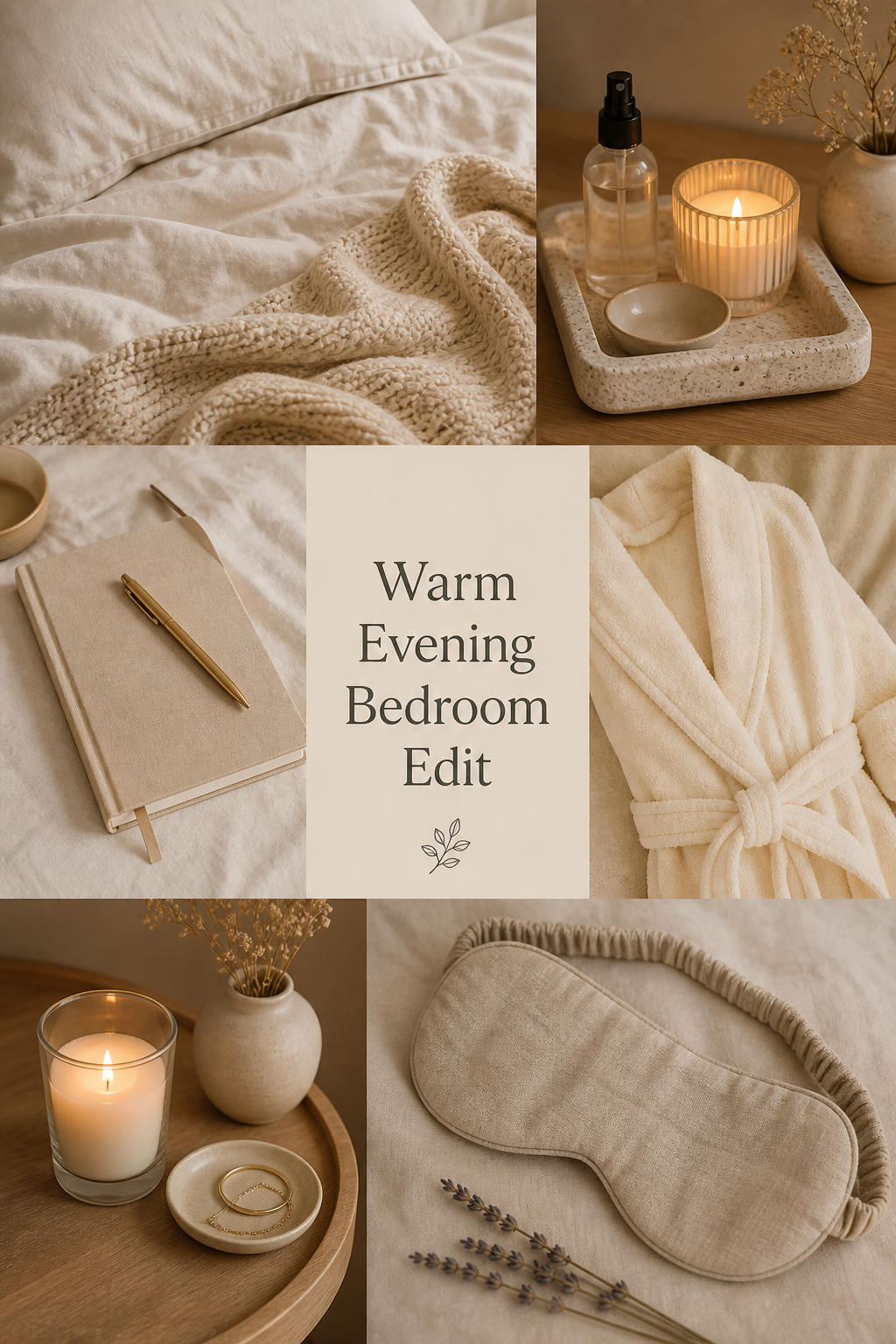
A bedroom ritual is not about doing more at night. It is about giving the day a graceful place to end.
A few contextual recommendations below include affiliate links, which means Opal Arc may earn a small commission if you choose to shop through them, at no extra cost to you.
Start with the bedside landing
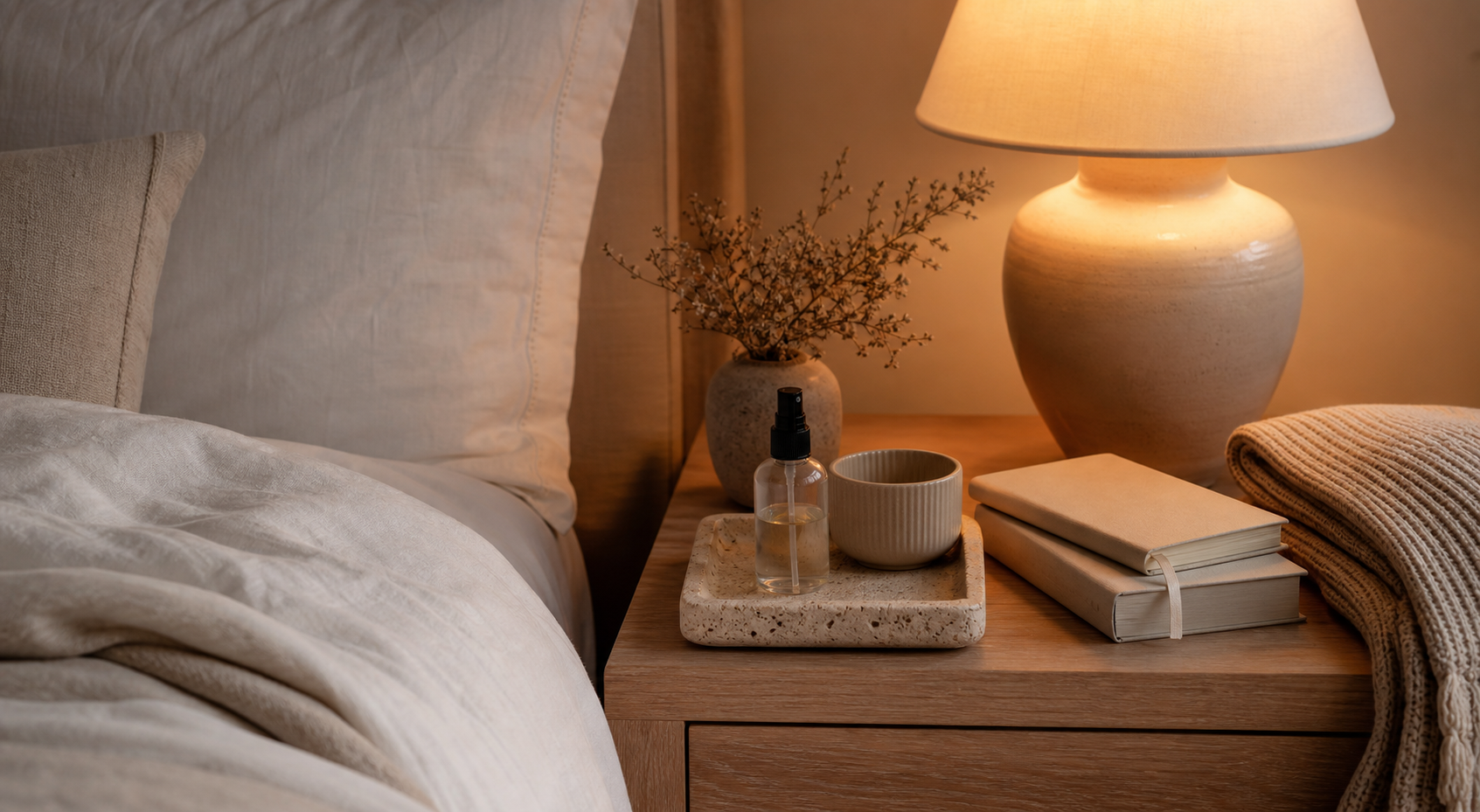
The bedside table is often where unfinished life collects: receipts, hair ties, supplements, books you are not reading, a glass from yesterday, the phone charger that makes the whole room feel more awake than restful. Instead of trying to organize the entire bedroom, start with this one landing place.
Keep only what belongs to the evening: a lamp, a small tray, a book or journal, one scent cue, and water if you like it there. The point is not minimalism for its own sake. The point is to remove the objects that keep asking you to manage them.
Use warm light as the first cue
Light changes the room faster than almost anything else. Overhead brightness can make a bedroom feel like an extension of the workday, while low warm light creates a clear emotional shift. If the bedroom only has one bright ceiling light, add one small source of evening light: a shaded table lamp, a low book light, a candle warmer, or a cluster of flameless candles.
The goal is a pool of light, not a fully lit room. Let part of the space fall quiet. When the room stops asking to be seen all at once, your attention has permission to narrow.
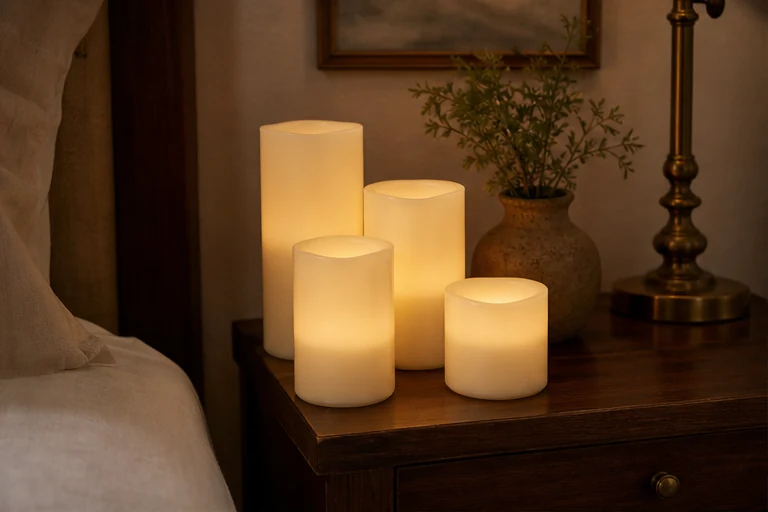 Recommended for this step: source similar soft flameless candlelight
Add one tactile layer
A warm bedroom should not only look soft. It should give your hands something calming to meet. This can be a cotton quilt, linen sheets, a chunky throw, a robe at the foot of the bed, or a sleep mask you actually like touching. Texture is one of the easiest ways to make a room feel cared for without adding clutter.
Choose materials that feel breathable and steady: cotton, linen, soft knit, stone, ceramic, pale wood. Avoid turning the bed into a display. A single folded throw or an extra quilt can be enough to make the room feel warmer and more intentional.
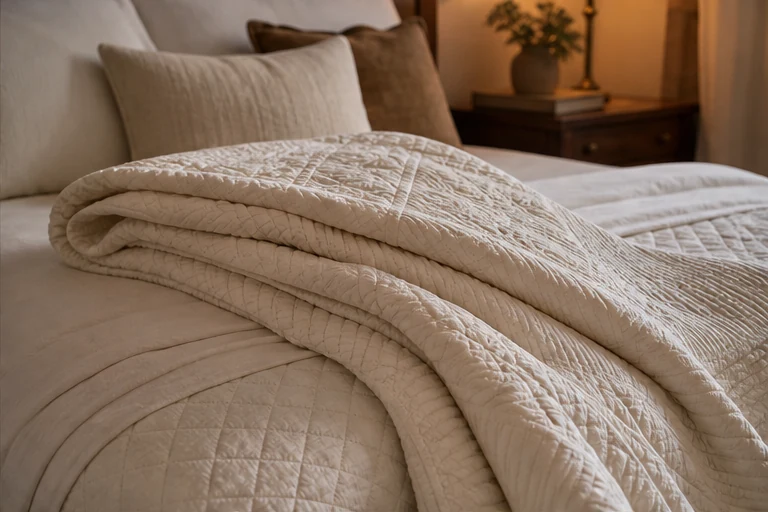 Shop the cue: source a similar soft cotton quilt
Choose a scent cue, not a cloud of fragrance
Scent works best when it is subtle and consistent. A linen spray, pillow mist, candle warmer, or lightly scented lotion can become an evening cue if you use it in the same part of the ritual. Keep it soft. The room should not feel like a store display or a perfume counter. It should feel like a private signal.
If fragrance gives you headaches or feels too much, skip it. You can create the same sense of ritual with warm water, a clean pillowcase, a folded robe, or opening the window for a few minutes. The cue matters more than the product.
 Optional scent cue: source a similar quiet pillow spray
Build a small ritual tray
A tray is useful because it gives small objects a boundary. Instead of letting a spray bottle, ring dish, lip balm, book light, and journal scatter across the surface, the tray turns them into a quiet set. Stone, ceramic, wood, or metal all work. What matters is that the tray gathers the objects that support your evening, not the objects that keep the day open.
Try keeping the tray limited to three things: one sensory cue, one reflective tool, and one practical object. For example: linen spray, a journal, and a lamp remote. Or a candle warmer, a book, and a small dish for jewelry. A ritual tray should make the next step obvious.
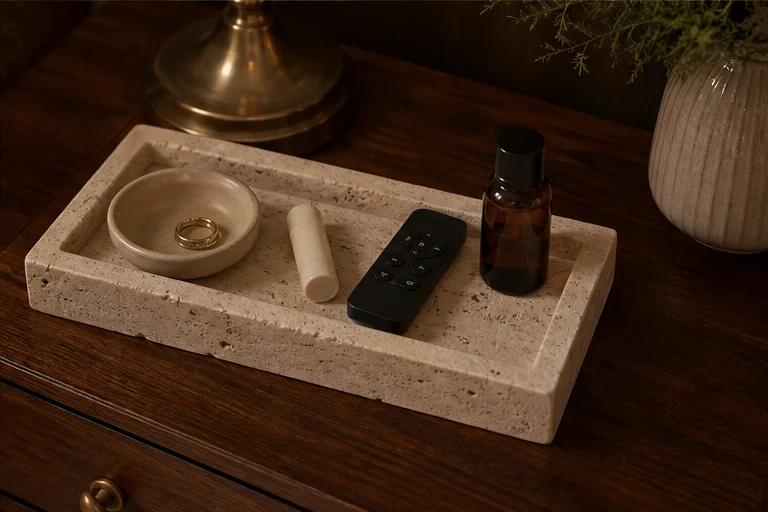 For a calmer nightstand: source a similar small travertine tray
Replace scrolling with a closing gesture
You do not need to become a person who writes three pages every night. A closing gesture can be much smaller. Write the one thought that is still circling. Make tomorrow's first decision. Read two pages. Place your phone across the room. Fold the robe over the chair. Turn down the bed. The action should feel simple enough to do when you are already tired.
If you like symbolic living, treat this as a gentle threshold rather than a rule. The lamp turns on, the day narrows. The tray gathers what belongs here. The bedding is pulled back. The room becomes less public, and so do you.
 For the closing ritual: source a similar thread-bound bedside journal
A 10-minute warm bedroom ritual
- Turn off the overhead light and turn on one warm lamp or low-glow light source.
- Clear the bedside surface until only evening objects remain.
- Fold one throw, quilt, or robe so the room looks ready to receive you.
- Add one scent cue if it feels supportive: linen spray, candle warmer, lotion, or fresh air.
- Place one reflective object within reach, such as a book, journal, or notepad.
- Write one sentence: What can wait until tomorrow?
- Move your phone out of the first reach zone.
- Let the final action be physical: pull back the covers, smooth the pillow, or place your hand on the fabric for a moment.
A future Evening Ritual Checklist
This kind of ritual is a natural fit for a printable Evening Ritual Checklist. The useful version would not be a strict routine. It would be a small menu of cues: light, surface, texture, scent, reflection, and closure. Until that exists in the Opal Arc digital library, you can use the 10-minute sequence above as your first draft.
Your bedroom does not need to become a perfect sanctuary before it can support you. Start with one corner, one light, one texture, and one closing gesture. The ritual is working when the room feels a little less like a place to recover from the day and a little more like a place that knows how to receive you.