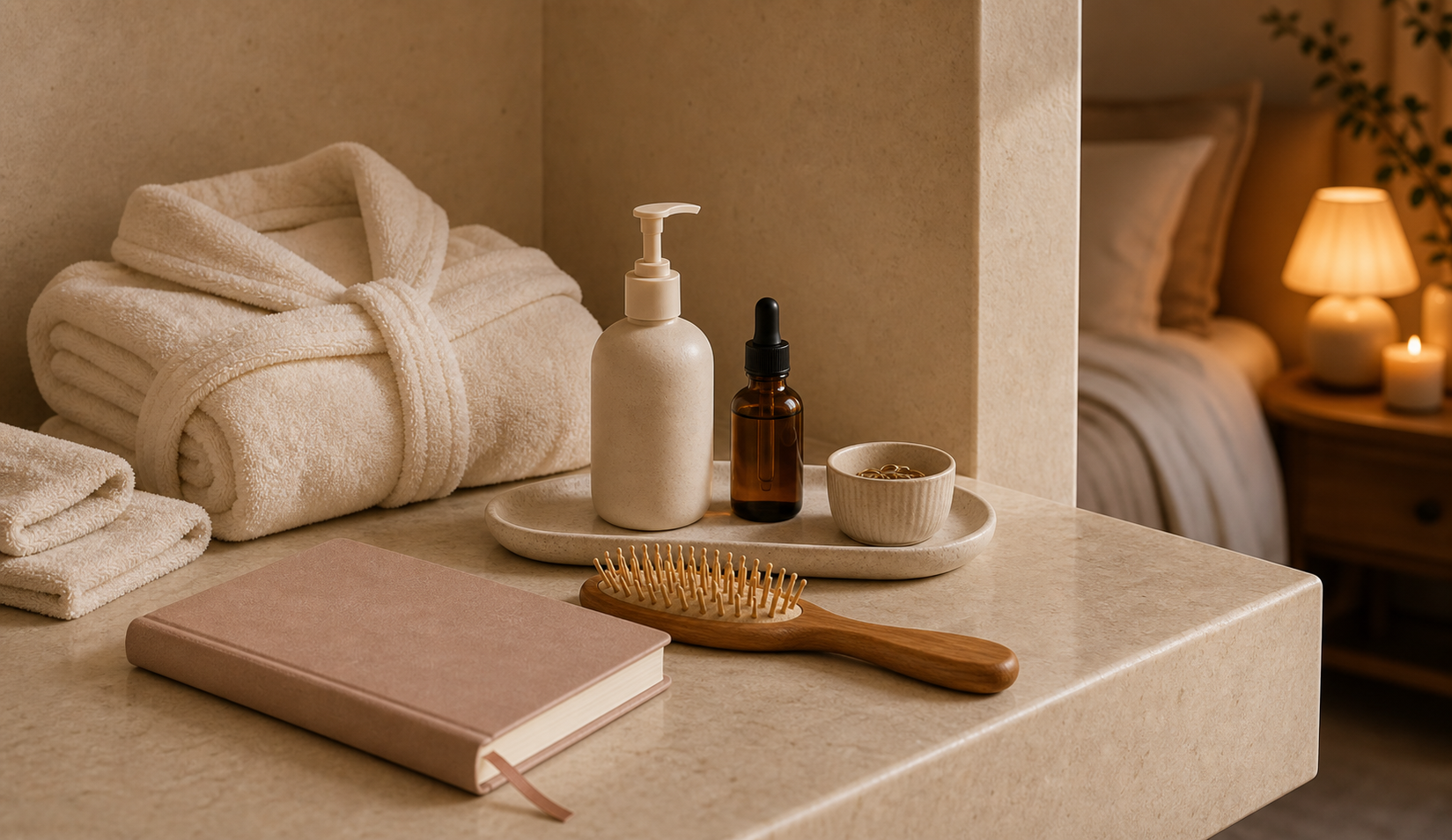
A gentle nighttime beauty ritual is not about becoming a more polished person before bed. It is about letting the day leave your body in small, repeatable ways. Clean skin can feel like a boundary. A robe can become a signal. Body oil, lotion, warm water, or a quiet journal can help the evening stop feeling like another place where you have to perform.
The best version of this ritual is not long. It is edited. Instead of adding ten steps to an already tired night, choose a few sensory cues that help you move from public self to private self: lower the room, cleanse gently, touch one body-care texture, soften your hair or robe, clear the surface, and close with one sentence.
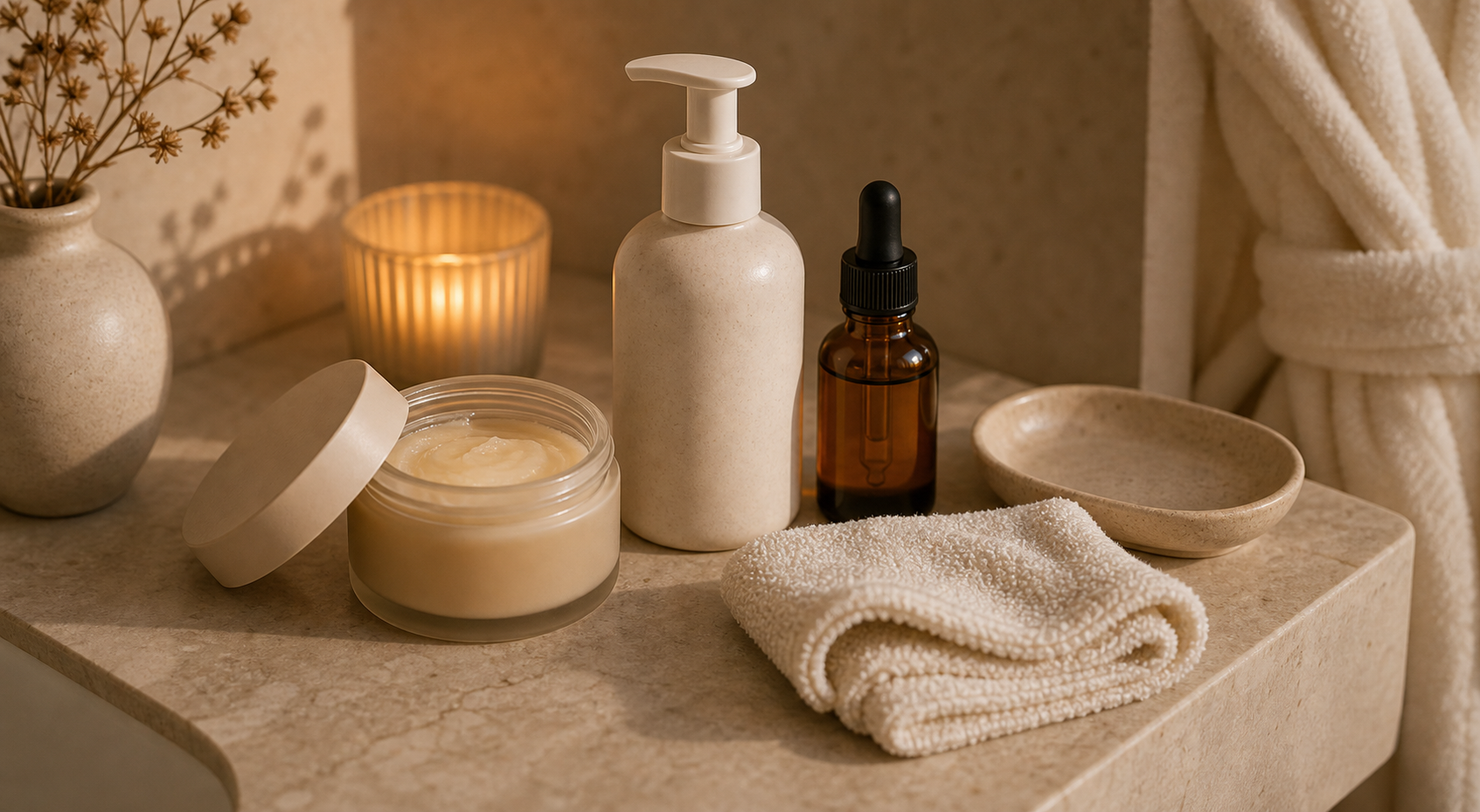
Beauty feels most restorative when it stops asking you to improve and starts helping you return.
As an Amazon Associate, Opal Arc earns from qualifying purchases. The recommendations below are included only where they support the ritual, not as a requirement for doing it well.
Lower the room before you touch your face
Start before skincare. Put the room into a quieter register: overhead light off, warmer light on, phone face down, towel or robe within reach. A beauty ritual works better when the environment is no longer speaking in daytime volume. This is the difference between rushing through products and entering a small threshold.
You do not need a perfectly styled bathroom. You need one clear landing place. Move visual clutter to the side, wipe the counter if that feels easy, and leave out only what belongs to this evening. The ritual begins when the surface stops asking for decisions.
Cleanse without turning it into a project
Cleansing is the most natural first step because it is both practical and symbolic. It removes sunscreen, makeup, city air, or simply the feeling of being handled by the day. If you wore makeup or a heavier sunscreen, a cleansing balm can make the first pass feel less abrasive. If you want one calm, low-drama step, choose a gentle cleanser and let the repetition do most of the work.
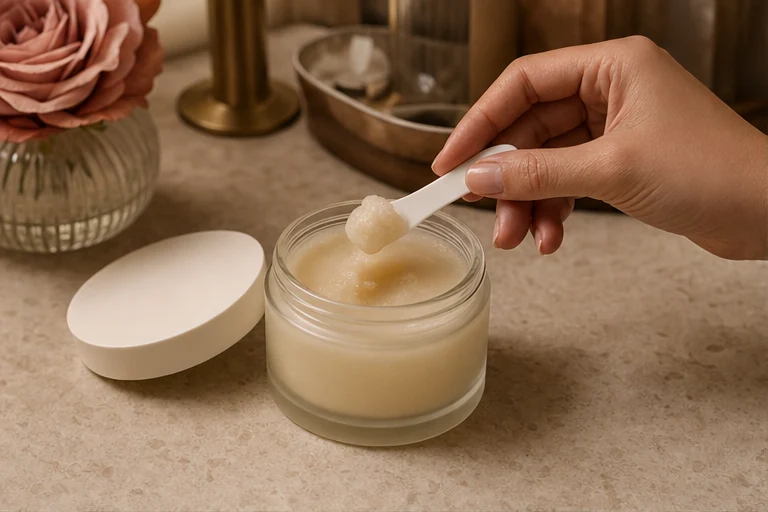 First cleanse: source a similar gentle cleansing balm
Keep this step soft. Use warm water, not punishingly hot water. Let your hands slow down. Pat dry instead of scrubbing. The point is not to chase a perfect skin outcome at 10:30 p.m.; it is to tell your body that the outside part of the day is finished.
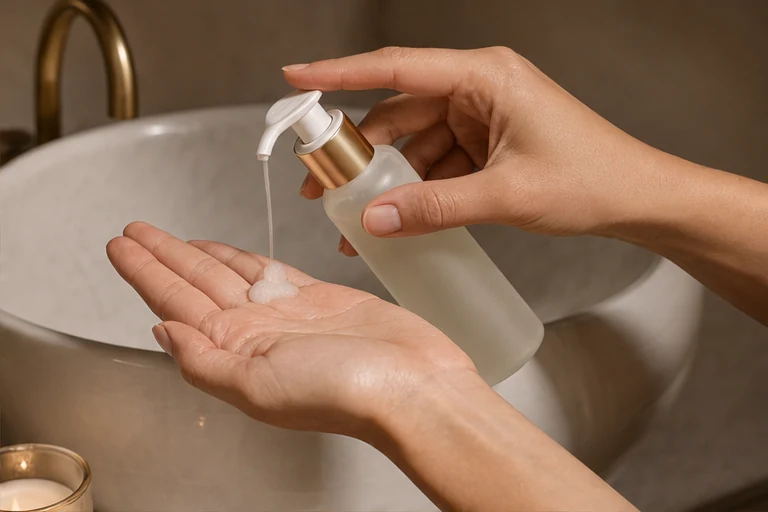 For the cleansing step: source a similar gentle hydrating cleanser
Choose one body-care step that feels grounding
A tired woman does not need a full spa sequence every night. One body-care step can be enough: oil on the shoulders, lotion on the arms and legs, hand cream by the bed, or a slow press of moisture into the collarbone and neck. This is less about transformation and more about contact. It gives your attention somewhere gentle to land.
If oil feels luxurious and slow, use oil. If lotion feels easier and less precious, use lotion. A fragranced body lotion can become the simplest cue if you already like a soft scent on your skin. Let the product serve the habit, not the other way around.
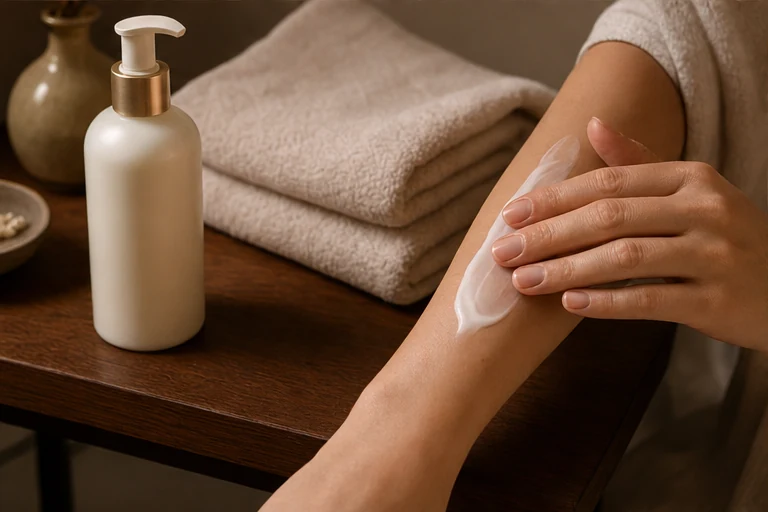 Simple body care: source a similar soft body lotion
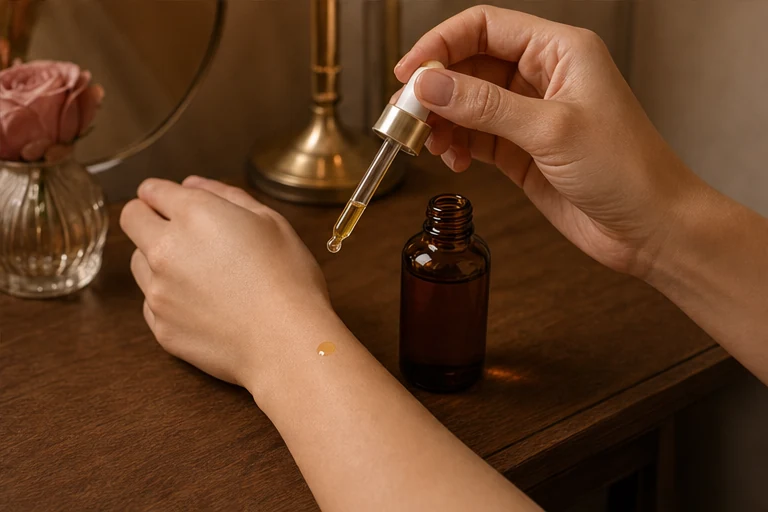 For the grounding step: source a similar soft body oil
Let fabric become the transition
The robe, towel, or sleep layer matters because fabric is one of the fastest ways to change identity at night. Work clothes come off. Soft fabric goes on. The day becomes less public. This is why a robe can be more than a robe in a nighttime ritual: it marks the point where you stop being available to the outside world.
Keep the fabric realistic for your life. It does not need to be silk or photogenic. It needs to feel good on tired skin, be easy to reach, and not make you fussy. If you like a hair step, a few slow passes with a brush or a gentle scalp tool can also become part of the same transition: less styling, more unwinding.
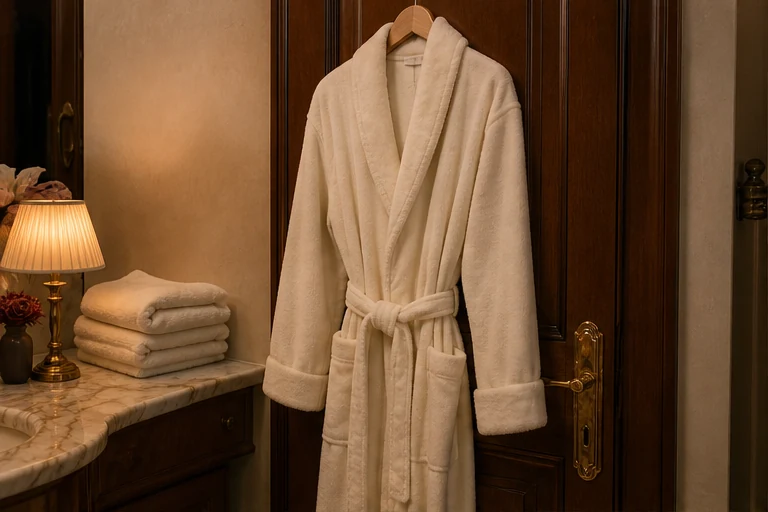 For the transition cue: source a similar soft cream bathrobe
Use scent as a whisper, not a performance
Scent can be powerful in a ritual, but it should not take over the room. A soft body mist, a lightly scented lotion, or the clean smell of warm water and cotton can become a signal that evening has begun. Use less than you think you need. The goal is recognition, not projection.
If fragrance makes you feel crowded, skip it. You can build the same ritual language with texture, light, and repetition. If you do use scent, keep it close to the body and tied to one moment: after lotion, before robe, or right before opening your journal.
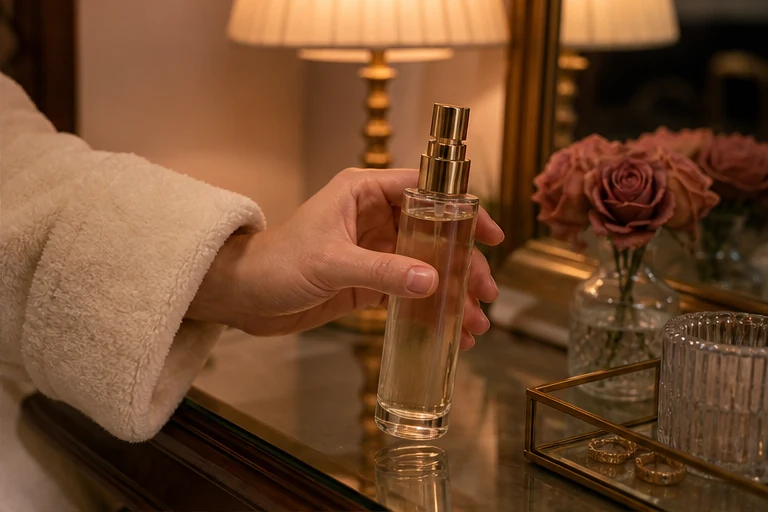 Optional scent cue: source a similar subtle body mist
Edit the bathroom surface
A bathroom counter can make a nighttime routine feel more chaotic than it is. Too many products in sight create too many small decisions. Instead of reorganizing the whole room, create one ritual zone: cleanser, body care, brush, journal if it lives nearby, and one small dish or organizer for the items that otherwise scatter.
This is not minimalism as a personality. It is kindness to a tired brain. When the tools have a visible home, the ritual becomes easier to begin and easier to finish.
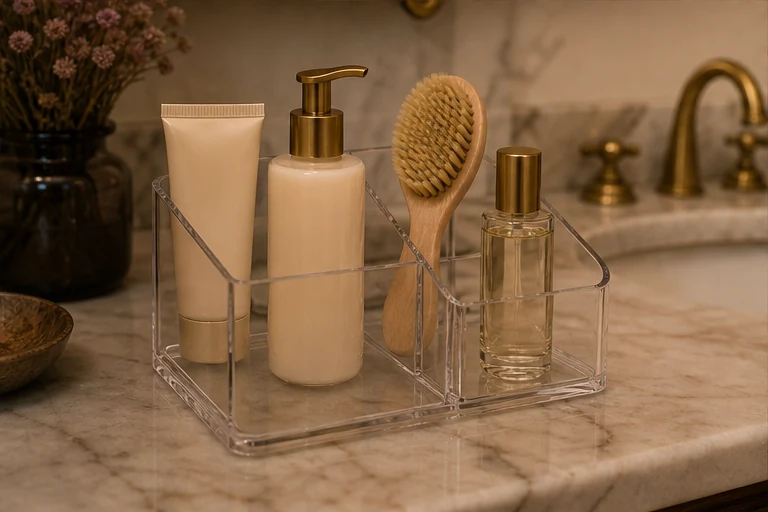 For a calmer counter: source a similar compact cosmetic organizer
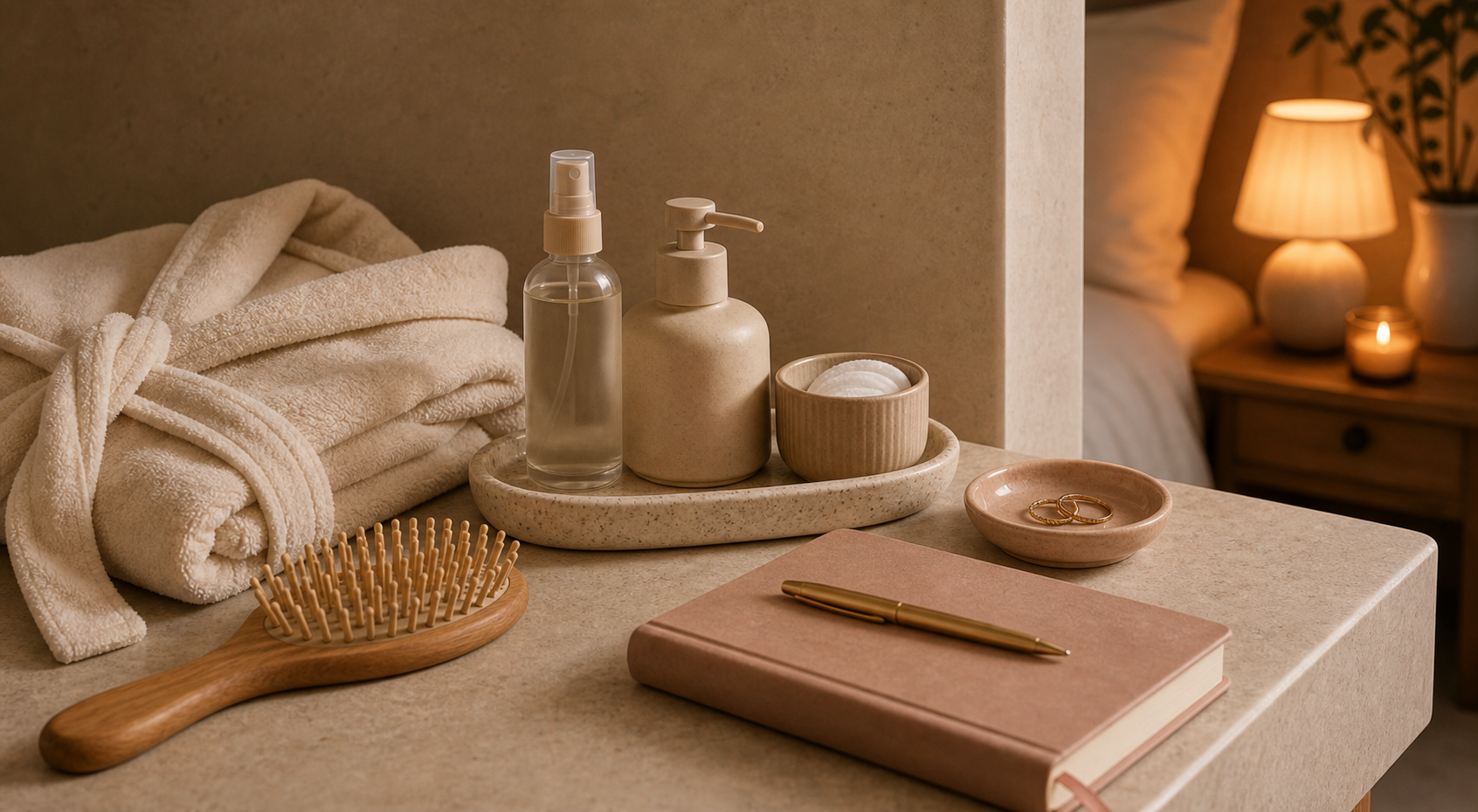
Close with one quiet sentence
The final step should be almost too small to resist. Write one line in a journal: what felt heavy today, what can wait until tomorrow, or what you are allowed to release now. You are not trying to become a perfect journaling person. You are giving the mind one place to put the loose thread before sleep.
This is where the ritual becomes gently symbolic. Water clears. Fabric receives. Scent marks the threshold. The sentence closes the door. None of these gestures need to be dramatic to matter.
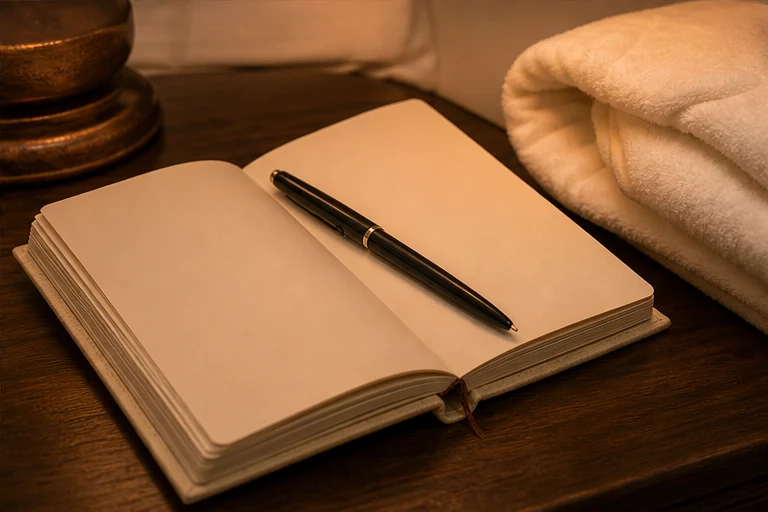 For the closing ritual: source a similar bedside journal and pen set
A 10-minute gentle nighttime beauty ritual
- Turn off the overhead light and place your robe or towel within reach.
- Clear one small bathroom or bedside surface.
- Cleanse slowly, using balm first only if makeup or sunscreen needs extra help.
- Pat your face dry and let the next step be simple.
- Use one body-care texture: oil, lotion, or hand cream.
- Put on soft fabric and brush your hair only if it feels calming.
- Use one scent cue lightly, or skip fragrance entirely.
- Write one sentence that helps the day close.
A future Evening Beauty Ritual Checklist
This ritual would translate beautifully into a future Evening Beauty Ritual Checklist or Night Routine Tracker: not a strict schedule, but a small menu of cues you can choose from based on your energy. Until that exists in the Opal Arc Library, use the 10-minute sequence above as a gentle first version.
A nighttime beauty ritual should leave you feeling more gathered, not more evaluated. Let it be quiet, tactile, and human. On the nights when you are tired, the smallest version still counts.